
Is it worth it?
 This credit can be easy and with little or no cost premium if your project only has a small amount of wood. A multifamily high-rise, for example, may have little wood on the project except for doors and cabinetry. In this case, it would be easy to reach the 50% Forest Stewardship Council (FSC) threshold.
Living With Climate Change: How to Design Buildings and Communities for Adaptation
by
| The living space in this new home built by Global Green in the Lower Ninth Ward of New Orleans is elevated four feet (1.2 m) to keep it above expected flood level. Numerous other "passive survivability" features are included. |
A lot of people have been working for a long time to try to head off global warming — and some progress is being made. Buildings are becoming more energy-efficient, fuel economy standards for vehicles are finally rising again, and use of renewable energy is burgeoning.
Create and implement solid waste management policy
This highly achievable prerequisite requires you to create and implement a solid waste management (SWM) policy aimed at reducing the amount of waste sent to landfill from your building. Most teams will be able to create a good SWM policy with in-house staff at little to no additional cost.
Having such a policy in place will provide building staff with clear procedures for managing all categories of waste, and by having a written policy covering those areas, it paves the way for your project to achieve:
What’s “rapidly renewable”?
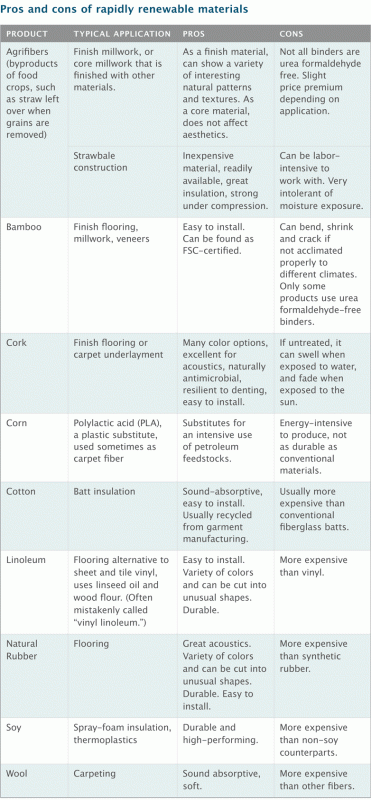
Rapidly renewable materials must have a harvest cycle of 10 years or fewer. This includes materials like bamboo, agrifibers, and others listed on the chart below. Materials for this credit can come from either plants or animals—but they have to be harvested without harming the animal. Wool is okay; leather isn’t.
Getting Around in Sweden
by
I had the great fortune two years ago to spend a couple weeks in Sweden. In late December 2007 I was visiting my daughter, who was studying at Lund University.
LEED 2009: Should You Upgrade Your Project?
by
Easy prerequisite – provide space for recycling
This prerequisite is very easy to meet. You only need to provide one space to store recycling. You are not even required to have a specific square footage, although the LEED Reference Guide does provide recommended square footage based on building size (see table below). To size this space properly, also consider the building’s needs and recommendations from your recycling hauler.
BuildingGreen Bulletin: Climate-Changed World — September EBN
by
Free BuildingGreen Email News Bulletin - An overview of some of the fresh information in BuildingGreen Suite. The mission of BuildingGreen, LLC is to facilitate transformation of the North American building industry.
Multiple options for "regional"
Regional materials are those that are extracted, harvested, and manufactured within a certain distance of your project site.
How far, exactly? Historically LEED has used a 500-mile radius to define regional products, but that made it difficult or impossible for coastal or remote regions to pursue this credit. A July 2012 LEED addendum added a more flexible approach, and now MRc5 offers two options to LEED 2009 projects: