
This highly achievable prerequisite requires you to create and implement a solid waste management (SWM) policy aimed at reducing the amount of waste sent to landfill from your building. Most teams will be able to create a good SWM policy with in-house staff at little to no additional cost.
Having such a policy in place will provide building staff with clear procedures for managing all categories of waste, and by having a written policy covering those areas, it paves the way for your project to achieve:
- MRc7: Solid Waste Management—Ongoing Consumables;
- MRc8: Solid Waste Management—Durable Goods;
- and MRc9: Solid Waste Management—Facility Alterations and Additions.
Document the policy, not the practice
You are required only to create a SWM policy setting measureable goals and defining the procedures for managing the waste streams covered by credits MRc7, MRc8 and MRc9, as well as mercury-containing lamps. Actually documenting the policy in practice, or compliance with those credits, is not a requirement here.
The SWM policy applies only to those waste streams that are directly within the control of building and site management; tenants using separate waste hauling contractors are exempt from the policy.
Writing the policy—avoid common missteps
A compliant SWM policy must adhere to USGBC’s “Program, Plan and Policy Model for LEED-EBOM” (see Resources). Project teams often make mistakes here by failing to establish quantifiable performance metrics or to assign a specific responsible party to perform key tasks.
Other common missteps include failing to include policy language addressing the proper handling of furniture in the discussion on durable goods, which teams may mistakenly limit to electronic equipment. Including a quality control and quality assurance procedure in your SWM policy will help ensure that furniture and electronic goods are donated or recycled, not placed in regular dumpsters and sent to the landfill.
These questions will help orient your team
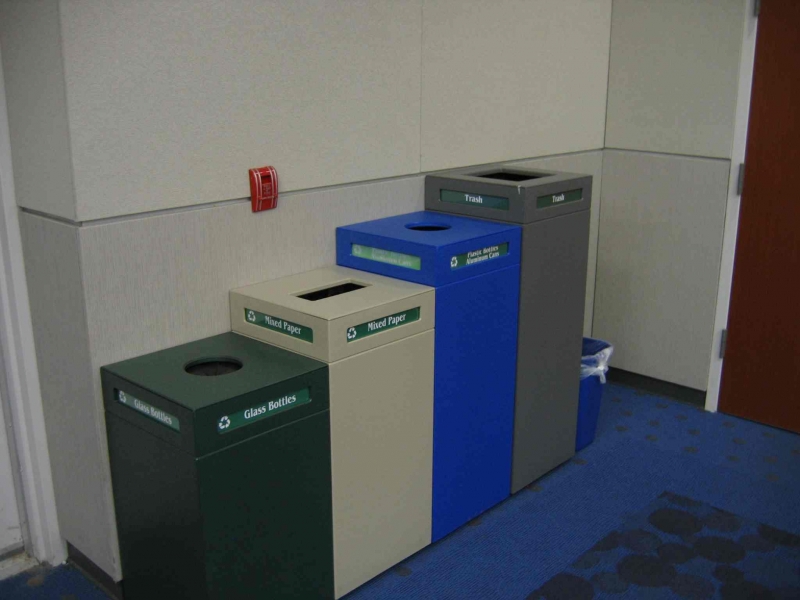 What are the different components of the building waste stream and which waste streams are within the building and site management’s control?
- Who will be responsible for managing and enforcing the SWM policy?
- What actions are necessary for the SWM policy to take effect prior to the start of the performance period?
- What are the goals for recycling, reuse, source reduction, and donation in the project building? How will targets be assessed?
- How will the responsible parties track, measure, and evaluate recycling, reuse, source reduction, and donation?
- What procedures and strategies will your team implement to meet the goals and intent of the policy?
- How can you involve your waste haulers in supporting your recycling goals?