
The Climate Scoreboard

by

Here's a tool that tries to connect the best available science directly to the international climate change negotiations and commitments, and the politicians are using it! Perhaps that, in itself, is progress. "How Does It Work? In the run-up to COP-15, we are scanning UNFCCC submissions and news sources from around the world to collect a list of what we call 'current proposals' — possible scenarios for greenhouse gas emissions by UNFCCC parties.
Read more »

A system tenants can connect to

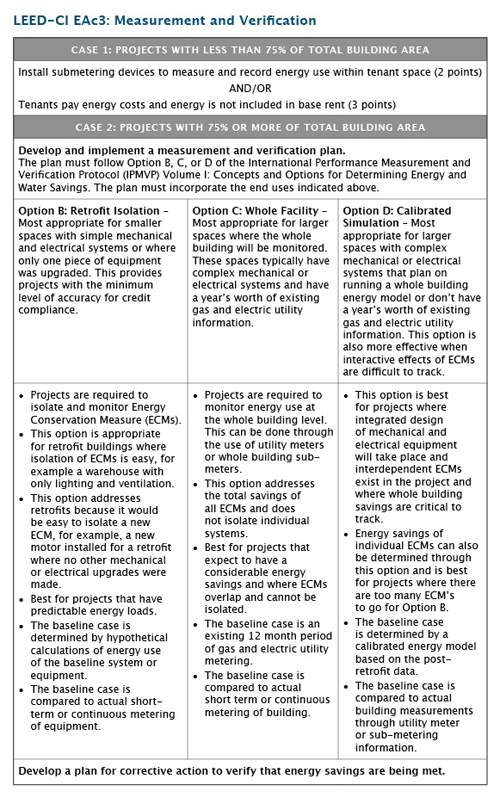
Measurement and Verification (M&V) can keep the owner and tenant informed of energy-use details, typically by recording actual energy use over the course of project occupancy and comparing that data with design-estimated energy use. An M&V program can ensure that all systems perform as specified in the design and identify any anomalies in equipment, operational procedures, or user habits. While M&V can be applied to a variety of metrics, including water use and indoor environmental quality, this credit focuses only on energy performance. 

Green Economies of Scale (post-Greenbuild ruminations)

by

By the end of Greenbuild, I was exhausted/troubled/elated with all sorts of conundrums swirling around in my head — not to mention a few partly written blogs, abandoned in favor of the next conversation... ... I had wanted to write about the 'executive roundtable' that happened that Wednesday — and responses to the twitter-submitted question "what single thing would have to change to make buildings actually regenerative?" (as in, way past 'less damaging' — past neutrality, even).

Read more »

How this credit is addressed in different building types

  • A phased flush-out is possible if different sections of the building are completed at different times, which is common in multi-tenant or mixed-use project types.
  • In facilities where air quality is particularly critical, such as healthcare and laboratory buildings, owners may require IAQ testing as part of standard building practice. 
  • Buildings with large numbers of identical rooms with separate ventilation zones—such as hotel rooms or apartment units—have been allowed to perform random sampling as an alternative approach in situations when the delivery of ou

It’s about good IAQ for occupancy

The idea behind this credit is to ensure good indoor air quality (IAQ) for a project for occupancy. IEQc3.2 can be seen as a belt-and-suspenders credit: even if the IEQc4: Low-Emitting Materials credits are pursued, along with IEQc3.1: Construction IAQ Management—During Construction, IEQc3.2 ensures that the building ends up with the intended result. (Although it’s typical to do so, you don’t have to pursue any of those credits to go after this credit.)