
Site selection is the key factor in determining how easily a project can qualify for this credit. If your project is located in a densely populated area that is well-served by public transportation, it should be very easy to meet the requirements.
Exemplary points are easy to achieve in this credit, especially for projects located in dense urban centers that are well served by the public transit system. If however, your project site is located further than two miles from transit facilities then achieving this credit may prove to be challenging.
An all-around good idea
Facilitating access to public transportation not only brings environmental benefits in the form of reduced greenhouse gas emissions and fewer cars on the road, but it can also reduce commuting costs for building occupants and help attract new hires and retain employees.
Options for larger projects
Larger-scale projects may want to consider working with local transit authorities to bring public transportation access near the project site if none already exists. You may not need to ask for an entirely new bus route—some other options include diverting an existing bus route or adding a stop on a route that runs nearby.
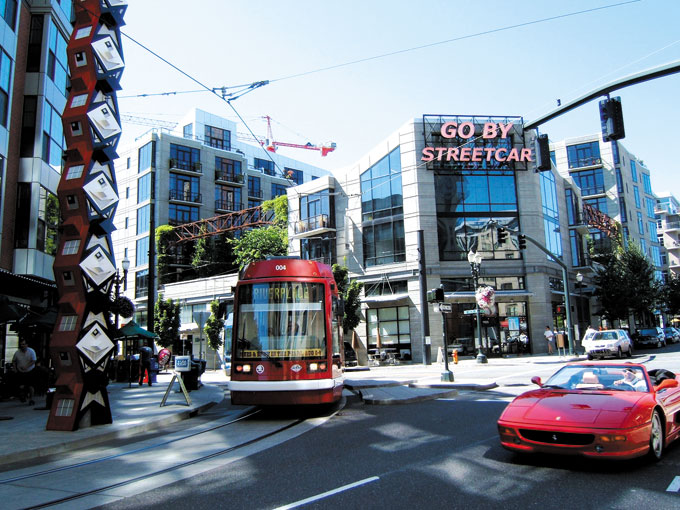
If a rail station or a bus line that a project plans to use for compliance has not been built yet, then you will need to provide proof that it will be funded, sited and planned at the time of project completion.
If public transportation cannot be brought closer to your project site, you still have the alternative of providing shuttles to existing public transit—either regularly scheduled or on demand. Note that shuttles buses should provide direct access to transit facilities within two miles of the project site, approximately a 5–10 minute drive, and must be available to all project occupants.