
If an existing building plays a starring role in your project, it’s a good candidate for this credit, which rewards the reuse of buildings and their structural components. In this way you can reduce the energy- and resource-intensive manufacturing of new materials, while prolonging the enjoyment of a building’s character and history. If the existing building plays only a small role, on the other hand, it is less likely to qualify for this credit, although it may contribute to materials reuse credits. If a project includes new construction in addition to building restoration, the project is only eligible for the credit if the floor area of the new construction is no more than two times the floor area of the retained existing structure.
A LEED for New Construction registered project can earn up to three points for reusing 55%, 75% or 95% of an existing building, as well as being eligible for MRc1.2: Building Reuse—Maintain Interior Nonstructural Elements.
Intensive calculations
Evaluate credit eligibility and targets using the eligibility and building reuse calculators available in the Documentation Toolkit. The process of documenting this credit by accurately measuring the area of building elements and tabulating them in the Building Reuse calculator can be fairly time-intensive. When measuring, be sure to consistently follow the credit rules and not double-count elements. In addition, a structural survey must generally be performed to confirm the integrity of the structures and identify any load restrictions. Non-structural elements may also require study by a qualified professional.
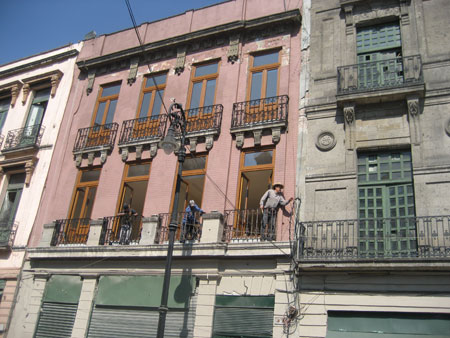
Assess building reuse with these questions
- Conduct a survey of the existing building conditions to ensure its structural integrity. What are the anticipated costs for structural reinforcements, building restoration, and demolition of unusable areas?
- Are there potentially hazardous materials present that will require remediation? If so, what is the anticipated cost for remediating and disposing of these hazardous materials?
- What would the cost be to demolish the existing structure and build a brand new building?
- If there is a building addition included as part of the project, is it less than 2 times the floor area of the existing structure?
- Are there any incentives available for restoration projects? Are there local restrictions on new construction that could be better negotiated with a renovation? Are there height limitations and historic standards affecting the building?
- What procedures may be involved in seeking approval from local historic authorities?