It’s all or nothing
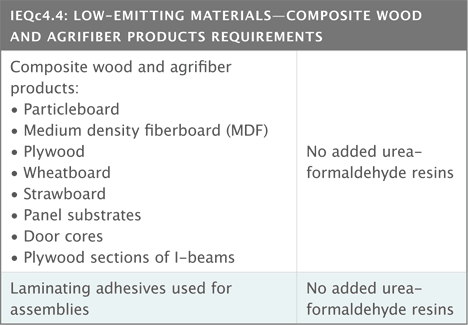 Like most of the other low-emitting materials credits, this credit is all-or-nothing.

Like most of the other low-emitting materials credits, this credit is all-or-nothing.
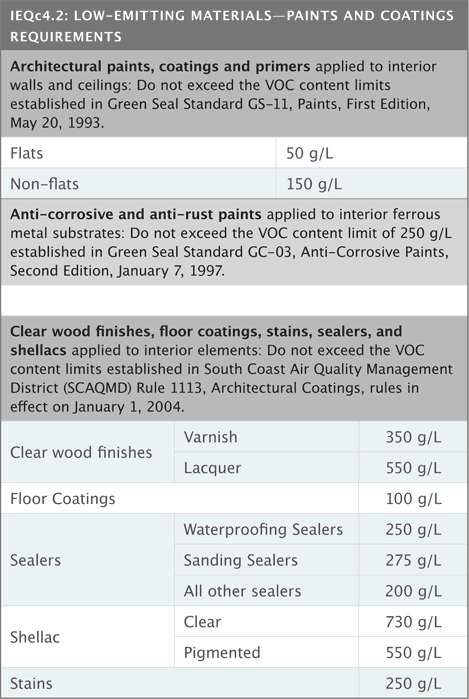 Like the similar credit, EQc4.1: Low-Emitting Materials: Adhesives and Sealants, it shouldn’t cost you anything extra to earn this credit—it will just take some work. Your first priority should be to specify only paints and coatings that comply with the credit’s VOC limits, and enforce those specifications on the jobsite.
This credit requires compliance with a varied group of items that cumulatively help keep pollutants out of the indoor air. These requirements include self-closing doors on janitors' closets, MERV 13 filtration on mechanical equipment, and entryway trackoff systems. Compliance will require the coordination of team members—including the mechanical engineer, architect, plumbing engineer, and contractor—and also impact project design and operations. The basic requirements are:
We've just released a neat new report on what it costs to achieve specific LEED credits. Based on the current LEED-NC 2009 rating system, "The Cost of LEED" draws on the experience of veteran cost estimators to provide prices for specific measures a project team would consider. The report helps a team understand the implications of LEED on the cost of its own particular project, with lists of "standard" approaches compared to "high performance" options, along with cost premiums for those options.
False-flush is a fairly common occurrence with sensor-activated toilet and urinal flushometers. I've had toilets flush three times before I've even used them!
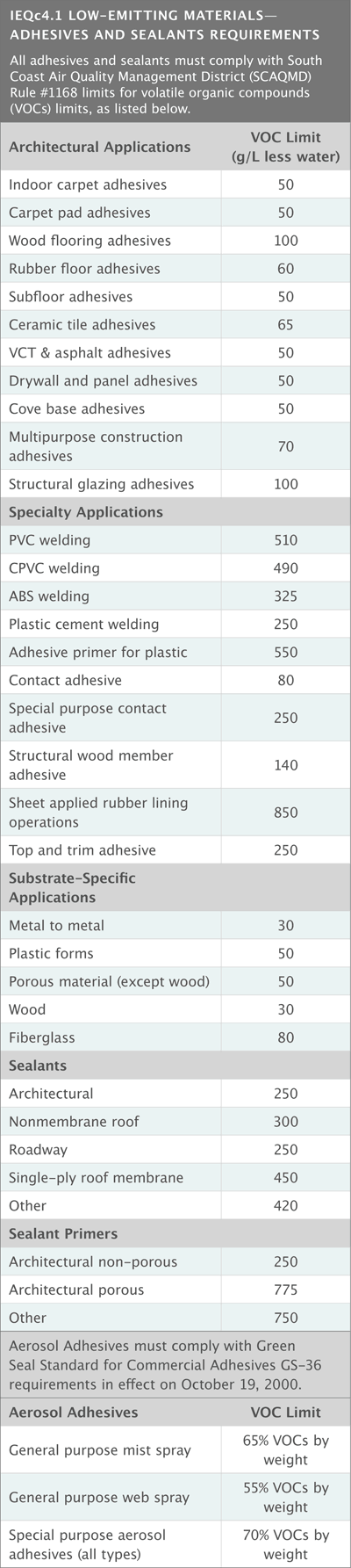 It shouldn’t cost you anything to earn this credit—it will just take a little work (the same is true for the related credit, EQc4.2: Low-Emitting Materials—Paints and Coatings). Your first priority should be to specify only adhesives and sealants that comply with the credit’s VOC limits, and enforce those specifications on the jobsite.
EQc7.1 requires that HVAC designs meet the requirements of ASHRAE Standard 55-2004, which deals with thermal comfort of building occupants. Specifically, ASHRAE 55 requires project teams to address air temperature, radiant temperature, humidity, and air speed. Earning this credit also sets the stage for you to earn EQc7.2: Thermal Comfort—Verification. In most cases, designing a system that complies with ASHRAE-55 is standard practice and documentation is the only LEED-specific requirement for achieving the credit, so it should cost very little to earn.
I was active in the solar energy movement back in the late 1970s and early '80s, when, indeed, a whole lot of ugly solar homes were built.
This credit is your project’s opportunity to demonstrate leadership in the green building industry and to let your team contribute creative approaches to the field of sustainable design. It’s also a great way for your project to achieve up to four additional points.
There are two different ways to achieve points under this credit:
This prerequisite establishes a baseline for providing a minimum amount of outdoor air to buildings in order to maintain good indoor air quality and keep occupants comfortable and healthy. This prerequisite references ASHRAE 62.1-2004 (with errata but without addenda) and is often more stringent than local building codes, although it is not likely to entail any added costs.