Two paths to one possible point
Teams can earn one point under this credit. There are two standard paths to earning an innovation point:

Teams can earn one point under this credit. There are two standard paths to earning an innovation point:
Teams can earn up to five points under this credit. There are three standard paths to earning an innovation point:
Achieve significant, measurable environmental benefits using a strategy that isn’t currently addressed in the LEEDv4 EBOM rating system. Remember that a single sustainable technology or a program that addresses a single sustainability issue will not be accepted. The Reference Guide includes examples of both suggested and ineligible innovation strategies.
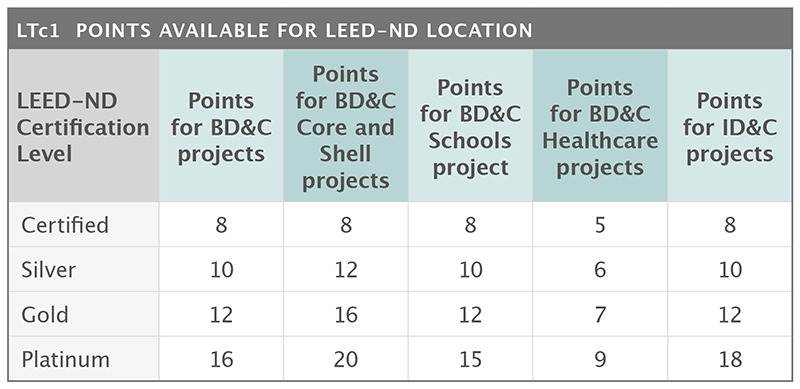 This credit encourages projects to locate in a LEED for Neighborhood Development certified site. There are many points to be had if you can manage to do this, but with a limited number of LEED-ND certified sites currently available, this credit won’t be achievable for many projects.
This credit encourages projects to locate in a LEED for Neighborhood Development certified site. There are many points to be had if you can manage to do this, but with a limited number of LEED-ND certified sites currently available, this credit won’t be achievable for many projects.
Project teams have several different green cleaning options to choose from under this credit. Standard O+M projects can only document one of the four available options and earn up to one point. If you’re working on an Interiors project, you can pursue up to three options and earn up to three points.
Teams can earn one point for installing and maintaining permanent entryway systems that meet the 10-foot length requirement. This strategy is typically straightforward and cost-effective for projects to achieve. However, it’s also fairly common for aesthetic considerations trump the benefits that entryway systems provide, so be sure to check with all relevant parties before counting on this point.
This credit rewards projects that exceed the requirements specified in the minimum energy performance prerequisite. Additional points are earned as your Energy Star score (Case 1) increases from 76 up to 95, or your percent improvement over the national average (Case 2) increases from 26% up to 45%.
This credit is particularly achievable for projects without wetlands or water bodies present onsite. If your project is locating on previously developed land, Option 1 is straightforward to pursue.
The requirements get more complex if your project pursues Option 2. Under this option, you’ll need to avoid developing on various sensitive land types as outlined in the credit requirements.
This credit is particularly achievable for projects without wetlands or water bodies present onsite. If your project is locating on previously developed land, Option 1 is straightforward to pursue.
This prerequisite requires you to create and implement a compliant policy that provides guidelines for facility maintenance and renovation (FMR) activities. Teams should be able to create the policy with in-house staff at little to no additional cost. The policy covers three major areas: materials purchasing, waste management, and protecting indoor air quality during FMR activities.