This credit goes beyond the commissioning scope required for the prerequisite. Any project can pursue this credit; however, it sometimes faces slow uptake due to some misconceptions around its benefits. The fact is, a robust commissioning process will very likely offer worthwhile savings to owners over the life of a building and do with a relatively quick payback period.
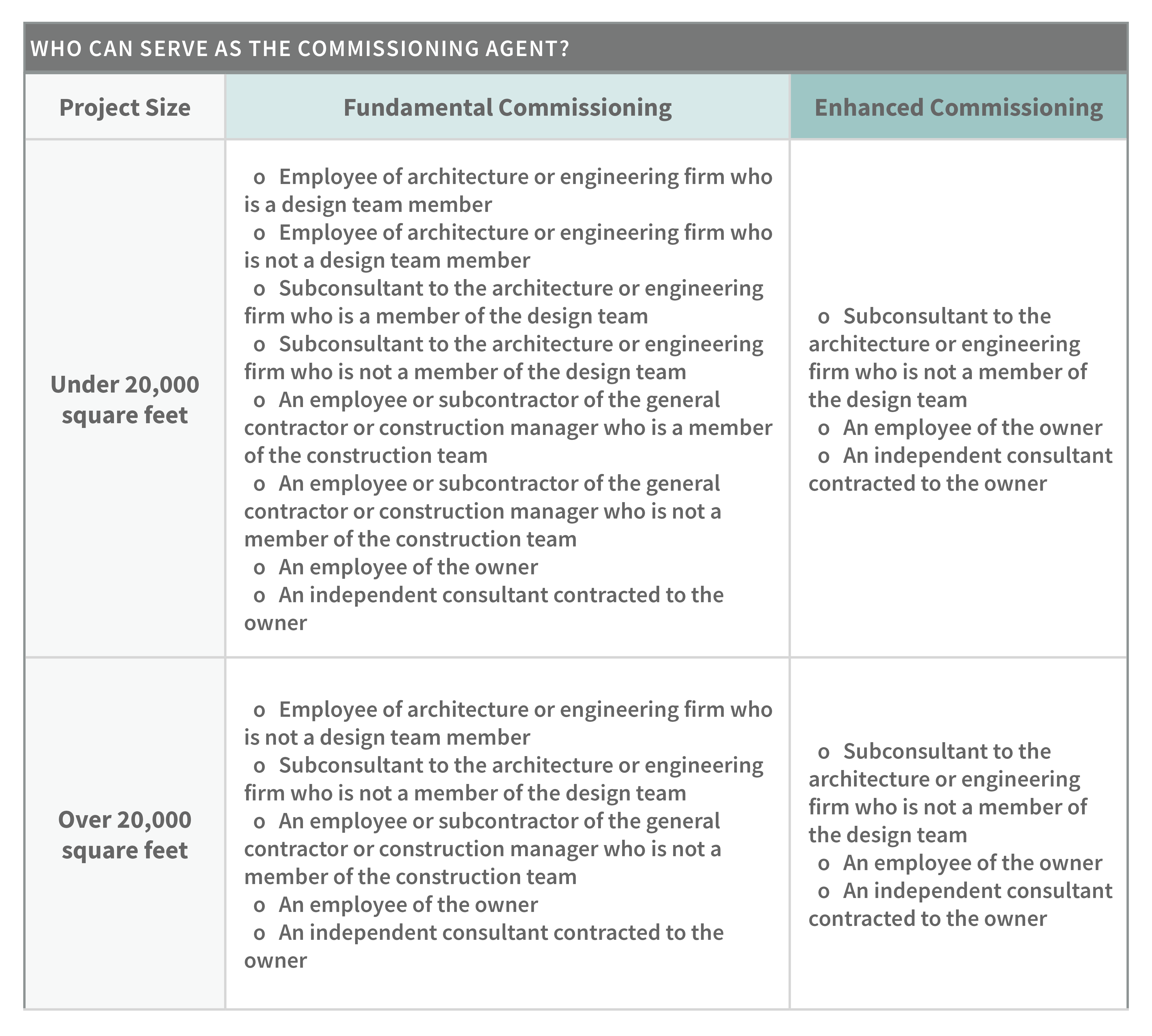
The rules around who can act as the commissioning agent (CxA) on a project have narrowed between the prerequisite and the credit. In contrast to v4, project pursuing the v4.1 credit can now engage a CxA who is an employee of the design and construction firm, but they must be a disinterested non-member of the design team. The intent is still to hire a CxA with no conflicts of interest so they can provide clear, objective leadership in executing the commissioning process and ensuring that both the owner’s goals and the design intent are achieved. See the table in the LEED Reference Guide for details on who can be the CxA for your building.
No matter who fills the role of CxA on your project, or how they are contracted, they should note all conditions that are not aligned with the owner’s requirements and design intent and report these findings and any recommendations directly to the owner.
Building enclosure commissioning (BECx) is also part of Enhanced Commissioning credit for BD+C projects. The benefits of envelope commissioning are significant, but the scope and industry are still maturing and developing. The cost for envelope commissioning is dependent on so many factors that it is difficult to put a cost range on the service. We recommend seeking proposals, including recommended scope, from at least two qualified firms and then evaluating the benefits of the proposals.
What’s New in LEED v4.1
- The credit has been revised so that commissioning agents may now be employees of the design or construction firm, provided they are a disinterested, non-member of the design or construction team.
- There is additional guidance on how the commissioning process should be documented.
- The ASHRAE version was updated from 2005 to 2013.
- Clarifies that enclosure systems with controls and automation must be reviewed and verified.
Should I Upgrade?
Upgrading may be beneficial to projects pursuing Option 2: Building Enclosure Commissioning, as this section includes the most updates and clarifications, especially as related to the qualifications of the building enclosure commissioning agent. Not having to hire an independent consultant could be questionable from a quality standpoint but would save on first costs.