
A New, More Accessible LEED Online for LEED v4
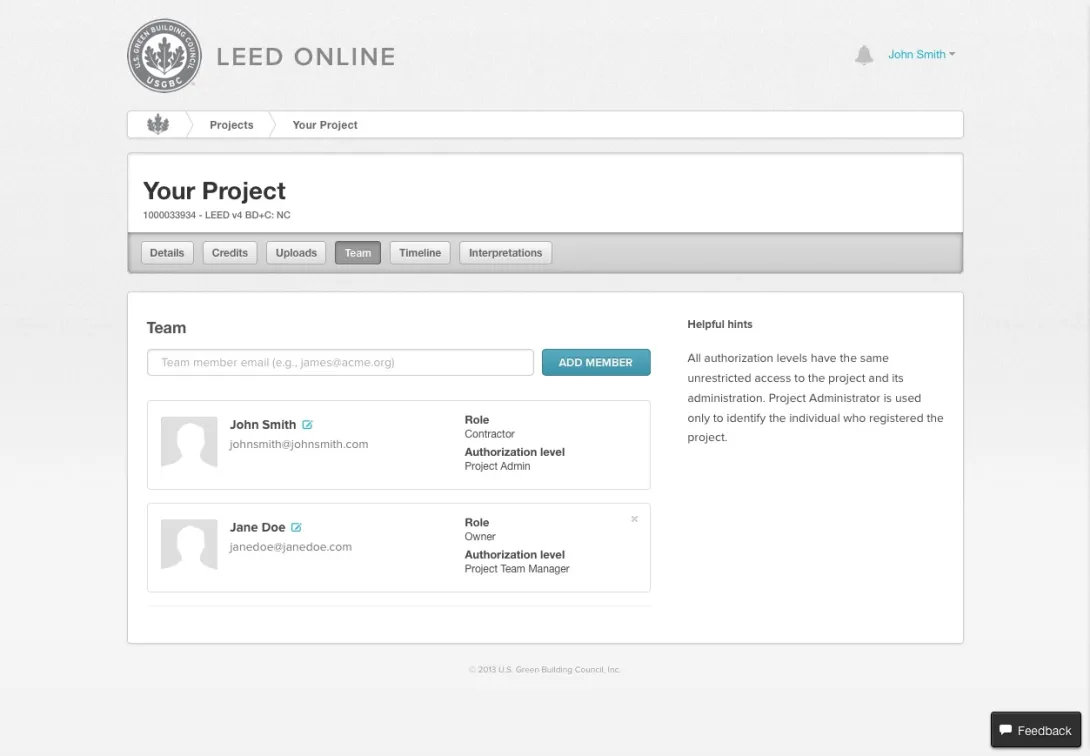
The new LEED Online integrates into USGBC.org, according to screen captures provided by USGBC.
Following months of speculation by LEED users, the U.S. Green Building Council (USGBC) has announced that LEED version 4 (LEED v4) will be supported by a new LEED Online documentation platform. In contrast with the maligned LEED Online version 3 (LOv3) platform that supports LEED 2009 projects, the new LEED Online will be faster, accessible to more browsers, and more integrated with other USGBC resources, according to USGBC.
"It’s built on html, css, and Javascript," Andrew Glaros, a user interface designer at USGBC, told LEEDuser. Cutting through the programming jargon, Glaros explained, "It’s going to work exactly like the USGBC website, or 99% of the websites you see on the Internet."
Whereas LOv3 was built on a SAP interface, a custom application that hasn't worked well on many common browsers and that has been particularly hard on Mac users, the new LEED Online is built more like a regular website. According to Glaros, it is designed to integrate smoothly with the USGBC.org experience. "It should feel more or less like the same environment," he said. Integration of LEED Online into USGBC.org follows recent trends, with LEED credential maintenance having been pulled into USGBC.org (from GBCI.org) this fall.
According to Glaros, using a single log-in, users will be able to click from the LEED credit library on USGBC.org, including its credit language, online reference guides, and LEEDuser forum, over to LEED Online.
Getting there
The new LEED Online is set to open for business December 9th, according to USGBC.
The existing LOv3 will continue to operate for LEED 2009 projects, just as the earlier LEED Online v2 continues to support LEED v2 projects. But if you're tempted to call the new LEED Online "LOv4," don't, says Chrissy Macken, manager of LEED technical development for USGBC. According to Macken, the new platform is simply "LEED Online." (And for those keeping track of all the LEED Onlines, there is also a separate LEED Online for campuses platform that is more like the new platform than the old, but which is separate from both.)
LEED 2009 projects will be able to upgrade to LEED v4, according to Macken, but because the platforms are so different, projects in LOv3 will not be able to port their data over to LEED Online.
Macken said that there is no increase in fees for registration or certification for either platform, and that projects that move quickly to upgrade to LEED v4 would not face a new registration fee. (She advised projects to contact USGBC directly to start this process.)
Reduction in number of forms
Leading up to the launch of LEED v4 at Greenbuild in November 2013, rumor spread that the number of LEED Online forms had been reduced by 80% compared with LEED 2009. Macken clarified for LEEDuser that while that might be true, it's more about the LEED Online universe of forms rather than the number of forms that an individual project might face. Because LEED 2009 was launched incrementally, with systems like Healthcare, Retail, and ND being added after the initial 2009 launch, Macken explained, a lot of duplicative forms entered the LEED Online system—thousands of them. Because LEED v4 has been developed more cohesively, Macken says there are more like 130 forms overall.
Even though the story here is more about streamlining the overall system, "We expect that people will spend less time on documentation for a wide range of credits," says Macken, pointing to light pollution reduction, indoor water use reduction, and energy efficiency as forms that have become more focused to good reviews from LEED v4 beta users. Having fewer forms will benefit LEED users juggling multiple rating systems, and reviewers should also be responsible for a more manageable set of documents. Macken also notes that fewer forms means less maintenance for the LEED technical staff.
Your comments
What do you hope to see in the new LEED Online? Do you think it will deliver on that, or are you going to wait and see? Please post your comments below, and also attend the new LEEDuser webcast, What Can We Learn from LEED's Critics?, to explore problems and fixes with the LEED certification process in more detail.