
The LEED v4 Ballot: The Case For and Against
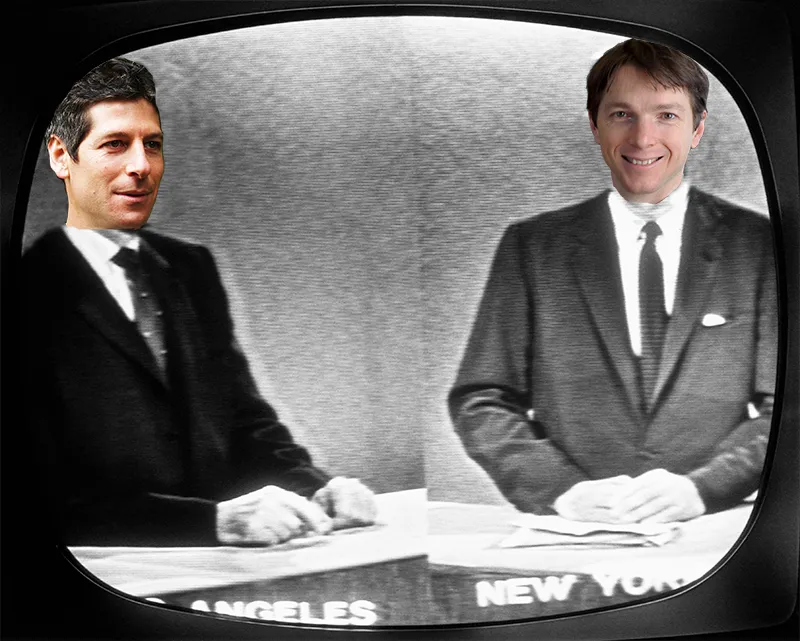
Our LEED v4 debate wasn't exactly "presidential," but it helped us sort out how we wanted to vote as a company on LEED v4.
As an educational opportunity for our entire staff and a way to sort out our thoughts on how BuildingGreen (publisher of LEEDuser) should vote on LEED v4, Tristan Roberts and I staged an impromptu debate during our weekly staff meeting. We flipped a coin to decide which of us would argue pro or con, and went at it with opening statements, rebuttals, and questions from the floor.
In the end most of the staff, including both Tristan and I, felt BuildingGreen should vote in favor of approving the draft, but it wasn’t a slam dunk. I led off with the arguments in favor of approving the draft.
Arguments in Favor of “Yes” on LEED v4
With powerful forces in politics and industry lining up against LEED, the standard needs our support. A vote against the new version would very likely embolden the American Chemistry Council and its allies who are lobbying congress and many state legislatures to ban LEED from public sector projects.
The new standard raises the threshold of achievement in many important ways, which are critical to retaining LEED’s standing as a leadership standard. These include reinforcing the connections between good intentions and actual performance, with the new Integrative Process credit and building envelope commissioning option, and tougher requirements for energy and water efficiency, for example. Given the “grade inflation” we’ve seen, in which more and more projects are now achieving the once-exclusive LEED Platinum rating, it’s high time to reset that bar—before LEED becomes “EED.”
Lots of work has gone into improving the rating system requirements, and on the whole they are much better in terms of aligning actions with desired outcomes.
The overall alignment of requirements across the rating systems is greatly improved, allowing for the addition of new project-type specific compliance paths while keeping the overall program manageable.
In addition to the rating systems themselves, there are many other aspects of the LEED program that strongly affect the user experience. USGBC has been doing a lot of work on LEED's “Balance of System” components. If the rating systems themselves are like PV panels, then LEED online, the Reference Guides, and the credit forms, are the inverters, mounting racks, and safety switches—the “balance of system” in PV parlance—that are needed to make the system work.
The Reference Guides and credit forms have been through multiple iterations already in the v4 beta process, for example. Problematic documentation requirements that didn’t add a lot of value, like requiring project owners to log into LEED Online to sign off on specific measures, have been removed. The new online Credit Library is also a powerful new resource that teams will find helpful. This level of preparation for a version launch is unprecedented in past LEED roll-outs—and bodes well for the success of the new system.
Arguments for “No” on LEED v4
Then Tristan responded with arguments against:
A few new credits in the Materials & Resources (MR) category contain requirements that are untested and, in some cases, not even clearly defined. USGBC has promised to be transparent in defining these requirements, and putting substantive issues out to ballot as needed, but it after six public comment periods it would be nice if they had the rating system better defined.
The key MR requirements are now structured around four new credits:
- Building life-cycle impact reduction: This credit includes the so-called “whole-building LCA” approach, that seeks to replicate for structural engineering what energy modeling does for mechanical system engineers. It’s a great goal, but faces some serious hurdles, as Paula Melton describes in her recent article.
- Building product disclosure and optimization – environmental product declarations: The environmental product declarations (EPDs) part of this credit is already working—many industry are now working hard to develop product category rules so that companies can produce EPDs. The concrete industry is setting a great example. But the “multi-attribute optimization” path seems to anticipate the availability of some certification programs that are not yet defined or adopted, so it’s hard to say exactly how it will work.
- Building product disclosure and optimization – sourcing of raw materials: A range of reporting mechanisms are cited for documenting responsible extraction practices, but none of them were created for the purpose to which they’re being used here. This credit will clearly require some additional clarification over time.
- Building product disclosure and optimization – material ingredients: This is the ingredient transparency credit that seems to have the American Chemistry Council so concerned. While it’s pushing in a good direction, it has too many options, some of which are poorly defined.
Moving beyond these challenging MR credits, many others now include language with much more detail and apparent complexity than before, which makes LEED feel less accessible.
Some of the new requirements, especially those in prerequisites, raise the bar on entry-level projects in ways that could discourage adoption. For example, there are now three prerequisites in the Water Efficient category of the Building Design and Construction rating systems (up from one in LEED 2009), and the Minimum Energy Performance prerequisite is much more stringent. Tristan made the argument that the choice to focus on a minimum Energy Star score for LEED-EBOM projects rather than allowing a percentage improvement option is a mistake that will exclude too much of the existing building stock—the buildings we need to involve now in reducing carbon emissions.
Overall documentation requirements appear to be more onerous than before, which introduces yet another barrier to LEED adoption—although this could just be a factor of their novelty, and once the tools are in place and the requirements become more familiar, the documentation work may not be any greater.
We noted during the debate that many of these concerns may be addressed by the time registration for LEED 2009 closes, as that date was extended last year until the middle of 2015.
How the Ballot works
Only staff at USGBC member organizations who opted in to the LEED version 4 “consensus body” can vote. The consensus body can’t be dominated by any one interest group, as defined by the Board of Directors. Each member organization gets one vote, which is divided proportionally if multiple people at the organization vote.
A simple majority (50% +1) is required in each of the voting body categories for the ballot to pass.
According to the official rules in Appendix II of the LEED Foundations Documents: A ballot is approved by the consensus body if:
a. A majority (more than 50%) of the members of the consensus body casts a vote, including abstentions; and
b. A minimum of two-thirds of votes cast are affirmative votes; and
c. A majority of votes cast by members of the consensus body in each interest category (producer, user, general interest) are affirmative votes.
If you’re in the consensus body, you have until June 30 to cast your vote.
What other considerations did we miss in our debate? How are you approaching this decision?