
To qualify for this credit you must have facility alterations and additions take place, under the specific LEED definition, during the Performance Period. Having just one trade specialty on the job does not constitute an alteration. Be sure your project is eligible for this credit by double-checking that the work performed meets the requirements shown below under the FAQs.
Purchase 50% sustainable products
You can earn this credit, which builds on the EPP policy developed for MRp1: Sustainable Purchasing Policy, by purchasing 50% of materials for facility alterations and additions using specific sustainability criteria. All facility alteration purchases—those that meet credit requirements and those that don’t—need to be tracked.
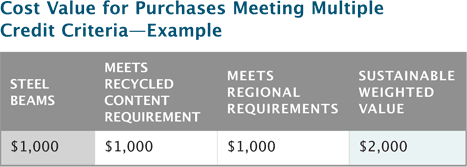
If a product meets multiple environmental requirements, the cost value can count towards the LEED multiple times. See the table below for an example.
The sustainable value of materials is calculated differently in EBOM than it is in the other rating systems. EBOM counts the total value of the material purchase as long as it meets the prescribed sustainable attributes. Other rating systems allow you to only count the percentage of the material’s cost based on the percentage of its sustainable attributes.
Timing the Performance Period
The difficulty with the credit is that facility alterations or additions must actually occur during the performance period to make you eligible, and this often prevents projects from achieving it. Consider extending the performance period for this credit back to include qualifying alterations or additions. The purchases can occur during the performance period, or up to two years prior to the end date of the performance period.
Tracking purchases can be tough
The likelihood of facility additions and alterations occurring during the performance period is greater in multi-tenant buildings; however, it is often difficult to coordinate the material purchasing and material data collection with all tenants. Although purchase rates must be extrapolated for tenants who do not participate in tracking, these estimated purchases are recorded as noncompliant.
If there's a large anchor tenant or high level of cooperation from tenants, this credit becomes more achievable. Otherwise, it may be not be worthwhile to pursue the credit.
Materials that need to be tracked for facility alterations and additions include:
- Structural building components and attached finishes such as wall studs, insulation, doors, windows, wood, panels, drywall, trim, ceiling panels, carpet, flooring.
- Construction applications such as paints, coatings, adhesives and sealants.
- You do not need to track furniture, mechanical, electrical, plumbing, or equipment purchases for this credit. Labor, installation, and shipping costs are also excluded.
Environmentally preferable purchasing includes buying products with these qualities: See the credit language for specific percentage thresholds.
- Recycled content
- Reused/salvaged materials
- Rapidly renewable materials
- Forest Stewardship Council (FSC) certified wood
- Regional materials
- Low-emitting paints, coatings, adhesives, and sealants
- Low-emitting carpets and flooring
- Urea formaldehyde-free composite wood binders
Consider these questions when considering this credit
- Is a facility alteration or addition scheduled to occur during the performance period?
- Have specific building materials been addressed in the EPP policy as developed for MRp1?
- Have certain products already been internally mandated by the project for design consistency for future additions or alterations? If they don’t meet sustainability criteria, can sustainable alternatives to these products be used?
- Can existing product tracking processes be reconfigured to track environmental qualities required by this credit? Or does such a system need to be created?
- Who is responsible for purchasing these types of materials? If applicable, how can a tracking system address multiple purchasing entities, including contractors, subcontractors, and operations staff?
- What are the project’s potential barriers to sustainable purchasing?
- How can you involve your vendors in supporting your sustainable purchasing goals?