
Capturing useful energy from natural energy flows like sunshine, wind, moving water is a great concept. The technologies to capture this energy aren’t cheap, however, nor do they work equally well in all locations. Typically, it’s hard to generate a significant fraction of total electricity we use onsite.
Before investing a lot of time and energy into this credit, focus on energy efficiency and passive energy collection such as daylighting, natural ventilation, passive solar heating before investing in renewable energy systems. This work will probably pay off faster than renewable energy, and if you do invest in renewable energy, you’ll have a lighter load for it to carry.
What types of systems count
All electricity generated and heat used on site is counted towards the credit. Electricity and heat generated onsite but sold to the grid at a premium is not eligible. (See table.)

LEED allows you to take credit for technologies that generate electricity and heat from sun, wind, water flows, and waste biomass. It also allows certain thermal technologies, such as solar hot water, concentrating solar collectors, biomass, and geothermal (extraction of heat from within the Earth, not ground-source heat pumps).
Of these, solar hot water systems are typically the most cost-effective. Small wind turbines have been found to not make sense on or near most buildings in urban areas because they need strong, steady winds, while the air around buildings is very turbulent. These turbines--especially vertical-axis turbines--are often oversold and our team is not aware of a single building-integrated wind installation that is living up to its expectations. Large turbines installed on site are a more dependable option for projects that have good wind resources and sufficient site area. (See Resources for more.)
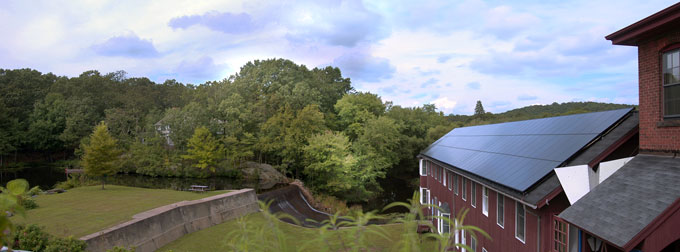 Depending on the features and location of your site and the expertise available, the technologies you can use are:
- Solar photovoltaics (PV)
- Wind turbines
- Small hydroelectric generation
- Certain types of biomass and biofuels—untreated wood waste, agricultural waste and animal waste
- Landfill gas captured as fuel
- Fuel cells if hydrogen is produced onsite without using fossil fuels
- Solar-concentrated power for steam turbines
- Solar-thermal hot water
- Activity-generated electricity.
Follow the money
The federal government and many states have a variety of incentive programs to encourage the use of renewable energy. These incentives can offset up to half of the costs in making systems cost-effective. Many states also have laws that provide for net-metering so that you can feed the excess electricity into the grid and get paid by the utility for that electricity. Some utilities will offer you above-market rates for feeding green electricity into their grid, but if you do that you’re selling the power’s green attributes as RECs, so you’re not allowed to use that energy to earn this credit.

Start by analyzing the site’s resources
The natural resources harvested by renewable energy technologies are site- and climate-specific. You can use both online databases and direct investigation of the site to figure out which technologies might be feasible. There are many factors to consider, so it’s wise to bring in an experienced consultant and/or technology vendors as early as possible in the design process to help with feasibility studies.
Double dip with energy credits
You can double-dip with onsite renewable energy. In addition to earning this credit, renewable energy helps to offset total annual building energy use, contributing to EAp2 and EAc1, if using Option 1: Whole Building Energy Simulation.