
You may think of commissioning, including hiring a commissioning agent, as an added cost—and it is. It’s likely to reduce your operational costs, however, by yielding 5%–10% improvements in energy efficiency and ensuring that facilities personnel know how to operate key building systems. It’s also a great way to catch mistakes like missing or incorrectly installed equipment, avoiding occupant complaints and callbacks, indoor air quality and thermal comfort problems, premature equipment failure, and litigation.
Commissioning (Cx) is the process of verifying that the building’s systems operate as intended, according to the owner’s requirements as set forth in project documents. Commissioning helps fill the gap between the design team, whose members usually aren’t meant to be responsible for checking minor construction details, and subcontractors, who may inadvertently err on key items like fan power settings or sensor locations. The commissioning agent (CxA) also provides the owner with the expert oversight of an engineer.
Fundamental vs. Enhanced
Fundamental Commissioning is a LEED prerequisite, although there are different compliance paths available depending on the project’s size. For projects less than 50,000 ft2, the CxA may be involved in the project as an associate of the contractor, construction manager, architect, or engineer and may have other project responsibilities. For projects over that size, the CxA may be still be from the same firm as a project team member, as long as he or she is not otherwise involved in the project. In both cases an independent consultant contracted to the owner is also an option, and may bring more value by offering better objectivity and a different perspective than someone associated with the design team.
For the Enhanced Commissioning credit, an independent consultant is required to be the CxA. Enhanced commissioning can offer additional benefits by involving the CxA earlier during design (instead of at the bid stage), by requiring that the CxA develop an operations manual and verify that staff are trained with it, and by requiring the CxA to review operations within 8–10 months of substantial completion.
Commercial Interiors scope
On Commercial Interiors projects, commissioning is required for all systems and equipment installed as part of the tenant’s project scope. This may include, for example, pumps from base building distribution systems, sub-metering equipment, controls, and air handlers. Any existing and unmodified systems that are outside of the tenant space do not need to be commissioned except at the point of connection to the tenant space service (if applicable).
Some project teams claim that they do not have access to the existing system to commission required components. Generally this should not be an issue because a project team will need the same level of access to even install or connect the new system as they will need to commission it.
Include at least the following in the scope of commissioning:
- Heating, cooling, refrigeration, ventilation systems and controls
- Lighting and daylighting controls
- Domestic hot water systems
- Renewable energy systems
Choosing enhanced vs. fundamental commissioning
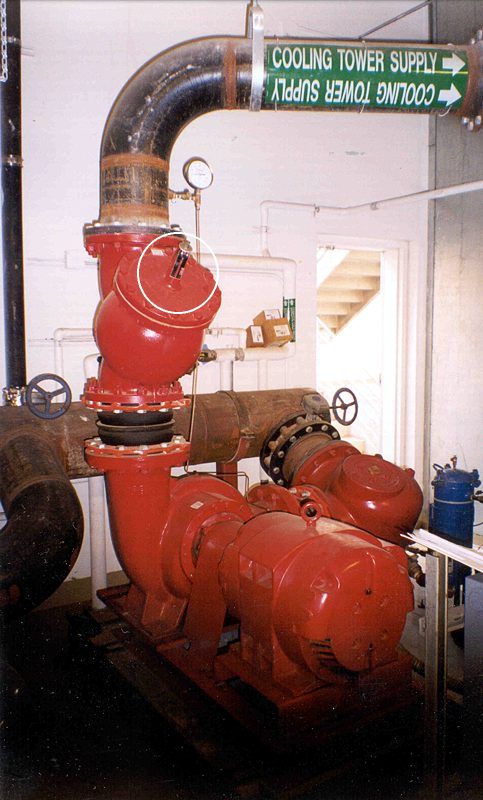 LEED divides the commissioning process into two parts. Fundamental commissioning focuses on installation and verification of the mechanical and electrical systems during construction. Enhanced commissioning covers a broader scope of systems, and involves broader participation of the commissioning agent, beginning during construction documents and continuing through occupancy.
The Enhanced Commissioning credit is open to any project, but project teams often choose not to pursue it due to the increased cost and uncertainty around its benefits. Enhanced commissioning fees are typically about $0.30/ft2 for LEED-CI projects. That fee represents a 25%–40% cost increase over fundamental commissioning, while providing almost double the scope of work. All projects benefit with the enhanced commissioning, though it is a must for large or complex projects. Projects can choose to make the decision for pursuing enhanced until after receiving the bid proposal, in order to evaluate the actual cost, but should hire a commissioning agent by the end of design development for enhanced commissioning.