
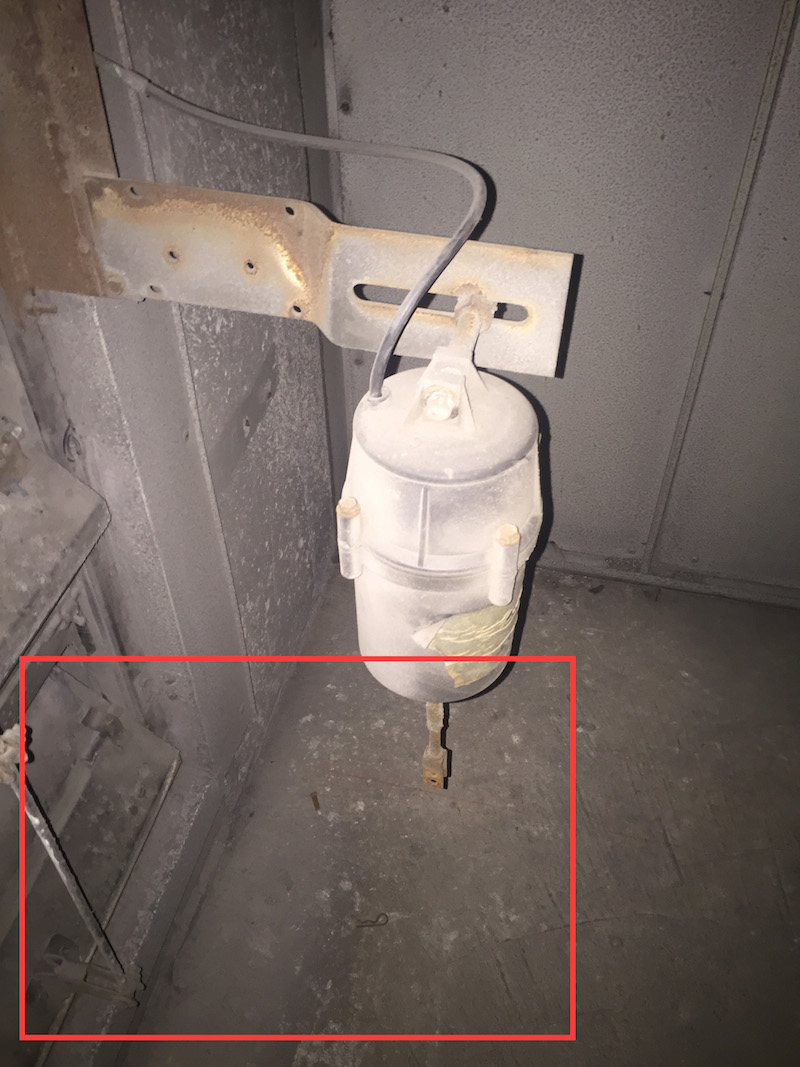
 Commissioning is a quality-assurance process that is applied to systems to prove that performance meets a specification. Commissioning has a long history going back to analog technologies (its origins are in shipbuilding), but digital control of building systems makes it even more crucial today. Computer control of building systems means that it is impossible to see by observation if HVAC and other systems have been programmed correctly. Are sensors sensing what they are supposed to? Testing and documenting is the only way to confirm the operation and performance of today’s buildings.
Commissioning (Cx) verifies that the building’s systems operate as intended and according to the owner’s requirements as set forth in project documents. Commissioning helps fill the gap between the design team, whose members usually aren’t responsible for checking minor construction details, and subcontractors, who may inadvertently err on key items like fan power settings or sensor locations or program codes. The commissioning agent (CxA) also provides the owner with the expert oversight of an engineer or highly experienced technician.
You may think of commissioning, including hiring a commissioning agent, as an added cost—and it is. It’s likely to reduce your operational costs, however, by yielding 5%–10% improvements in energy efficiency and ensuring that facilities personnel know how to operate key building systems. It’s also a great way to catch mistakes like missing or incorrectly installed equipment or wrong or poorly written code, avoiding occupant complaints and callbacks, indoor air quality and thermal comfort problems, premature equipment failure, and litigation.
Consider going beyond fundamental
LEED divides the commissioning process into two parts, with the commissioning process for both fundamental and enhanced starting prior to the completion of design documents.
Note that this division has changed in LEED v4, so review the scope carefully. Fundamental commissioning requires a review of project documents (OPR and BOD) and review of project design drawings, and then focuses primarily on the construction phase, with the CxA verifying the installation and operation of mechanical, electrical, plumbing, and renewable energy systems.
In LEED v4, this has been expanded. For example, fundamental commissioning includes developing a Current Facilities Requirements (CFR) plan, which is a slimmer version of the Systems Manual that is a requirement of enhanced commissioning.
Enhanced commissioning in v4 has a slightly broader scope with greater involvement by the CxA before and after construction as one option. Before construction, the CxA reviews contractor submittals, and verifies that owner requirements for the systems manual and operator training are incorporated in construction documents. After construction, the CxA compiles and then verifies the systems manual delivery, verifies the completion and effectiveness of operator training, verifies seasonal testing, develops an ongoing commissioning plan, and conducts a warranty phase review within 8–10 months of building occupancy. Enhanced commissioning expands the role of the CxA during construction and after completion.
Also, envelope commissioning has been added as an option in v4, which brings both fundamental and enhanced commissioning techniques to the envelope of the building. The envelope of the building represents the future fixed cost of energy for the life of the building: commissioning it is effort well-spent. Envelope commissioning is very different from mechanical commissioning, though, because a major part of the benefit occurs during design review. Testing is imperative during early construction, be it of a mock-up assembly or an initial assembly completed within the building. Testing may still be done during construction and at completion, but remediation at those stages could be difficult and expensive.
The Enhanced Commissioning credit is open to any project, but project teams sometimes choose not to pursue it due to the increased cost and uncertainty around its benefits. However, with the increase in scope of fundamental commissioning in LEED v4, the cost difference between the two has narrowed. That could make enhanced commissioning more attractive.
Commissioning costs can vary widely depending on the size and complexity of a given project. Some estimates show the cost ranging from $0.19–$1.50 per square foot. By another metric, the cost may be 1.00%–1.25% of the total project cost. The enhanced commissioning scope will certainly fall into the higher end of these cost spectrums In LEED 2009, enhanced commissioning carried a predictable premium over fundamental; but only time will tell what the premium looks like under LEED v4.
What’s new in LEED v4
The updates to this prerequisite boil down to changes in three areas:
- Clarification around requirements related to the commissioning authority’s experience and employment, and the timing of their involvement in the project
- Expanded scope of required services relating to commissioning mechanical, electrical, and plumbing systems; and addition of limited scope related to building envelope
- Inclusion of systems review and documentation development, which was previously part of the enhanced commissioning credit scope
Which systems must be commissioned?
Include at least the following systems in the scope of commissioning:
- Mechanical – including heating, ventilation, air conditioning, and refrigeration, plus associated controls
- Electrical – including lighting and controls, daylighting, service, and distribution, plus associated controls
- Plumbing – including domestic hot water systems, pumps, and controls
- Renewable energy systems
Note that the scope of commissioning activities required for electrical and plumbing systems has been expanded in LEED v4. There’s also a new requirement for the CxA to verify that building envelope requirements are described in the owner’s project requirements (OPR) and basis of design (BOD) during the design phase. However, full envelope commissioning is not required unless Option 2 in Enhanced Commissioning is pursued. These changes from LEED 2009 are described in more detail below.
Selecting a commissioning agent
For most projects the CxA may be a qualified employee of the owner, an independent consultant, an employee of the design or construction firm who is not directly involved in the design or construction of the project, or a disinterested subcontractor of the design or construction team.
The intent is to hire a CxA with no conflicts of interest so they can provide clear, objective leadership in executing the commissioning process and ensuring that both the owner’s goals and the design intent are achieved.
There are a few exceptions to the above:
- The CxA maybe a qualified member of the project’s design or construction firm if:The CxA may notbe an employee of the design or construction firm if the project is also pursuing Enhanced Commissioning. However, the CxA may be a subcontractor to the general contractor if certain conditions are followed—see more under the FAQs below. Typically it is advisable for projects pursuing both fundamental and enhanced commissioning use the same CxA for all tasks.
- The project is less than 20,000 square feet (this is a change from LEED 2009, where the threshold was 50,000 square feet).
- The project is a small data center or space requiring specialized knowledge of systems. “Small” in this case means that the computer room cooling load is less than 2,000,000 Btu/h (600 kW), or the total computer room peak cooling load is less than 600,000 Btu/h (175 kW).
No matter who fills the role of CxA on your project, or how they are contracted, they should note all conditions that are not aligned with the owner’s requirements and design intent, and report these findings and any recommendations directly to the owner.

Requirements for the commissioning agent’s qualifications
You must select a “qualified” commissioning agent to order to meet this prerequisite. In this case, “qualified” means that the individual must have experience performing commissioning tasks from early design through at least 10 months of occupancy on at least two projects that are similar to the LEED project. Similar in this case does not only mean project size, though that may certainly be a factor. More importantly, the CxA’s experience should include projects with similar or more complex system types and/or space use.
When to engage a commissioning agent
To meet the prerequisite requirements the CxA needs to be engaged before the end of the design development phase. This gives the CxA the opportunity to review the OPR, BOD, and design documents; provide valuable insight into potential design optimization strategies; and begin implementing the commissioning process to ensure a coordinated effort during construction.
Required systems documentation
The CxA is responsible for developing a current facilities requirements (CFR) document and operations and maintenance (O&M) plan. The CFR and O&M plan serve as a reference for the owner and the building operating personnel throughout occupancy, providing a comprehensive source of information that can be used to diagnose whether a system is operating to its intended settings. See the Reference Guide for the items that must be addressed in the CFR and O&M plan.
Scope of Work for LEED v4 Fundamental Commissioning
Predesign
- Owner develops Owner’s Project Requirements (OPR)
Schematic Design
- Design team develops Basis of Design (BOD)
Design Development
- Owner designates CxA by the end of the design development phase, sooner if possible
- CxA reviews OPR and BOD
- CxA conducts commissioning review of design drawings
- CxA develops initial commissioning plan
- Owner and Design Team update OPR and BOD as necessary
Construction Documents
- Project team incorporates commissioning requirements into construction documents
Construction and Installation
- CxA verifies the installation and performance of commissioned systems
- CxA performs systems functional performance testing
Occupancy and Operation
- CxA develops final commissioning report
- CxA compiles Current Facilities Requirements (CFR) and Operation and Maintenance (O&M) Manual
Expanded requirements for electrical, plumbing, and envelope systems
The requirements for commissioning these systems have been expanded in LEED v4.
- Electrical systems: In addition to the usual testing of lighting systems and controls, electrical commissioning now requires a review of the electrical service and distribution. Whereas commissioning under LEED 2009 focused on energy efficiency and system functionality, goals now extend to system durability and reliability. As such, the CxA must now look for design and construction documentation to clearly show the path of electricity from the service entry to switchgear to distribution panels to equipment, for electrical panels to be balanced, and for information such as grounding specifications and emergency power requirements to be included. During the performance phase, the CxA may coordinate the measurement of voltage and amperage readings across phases at the power supply to a given piece of equipment.
- Plumbing systems: The plumbing systems commissioning scope now extends from just domestic hot water (DHW) systems to any energy-consuming plumbing equipment and its associated control. This mainly means pumps. In addition to DHW circulation pumps, the scope should now include pumping and any automatically controlled valves associated with house water systems and non-potable systems such as stormwater, irrigation, sump, and vacuum return.
- Building envelope: LEED v4 places a greater emphasis on building envelope commissioning (BECx) to support optimization of envelope performance. To that end, Enhanced Commissioning now includes an option to increase points by executing a full envelope commissioning process in accordance with ASHRAE Guideline 0-2005 and the National Institute of Building Sciences (NIBS) Guideline 3-2012. While this is not required for the prerequisite, EAp1 does lay the groundwork for envelope commissioning by requiring the CxA to review the envelope design and verify that the requirements and specifications for the envelope are included in the OPR and BOD. Note that BECx can be done and points achieved without performing enhanced commissioning on energy systems.