
Managing indoor air quality (IAQ) systematically during construction is becoming more and more common as contractors gain more experience with LEED. It benefits the health of everyone who works on the site, not just the eventual occupants of the building.
Not a one-time thing
Earning this credit can be fairly easy, but it does require careful coordination and buy-in from all the subcontractors and field personnel involved in the project. It’s important to remember that IAQ management is not a one-time compliance event that can be checked off a list—it must be an ongoing effort for the duration of the construction process.
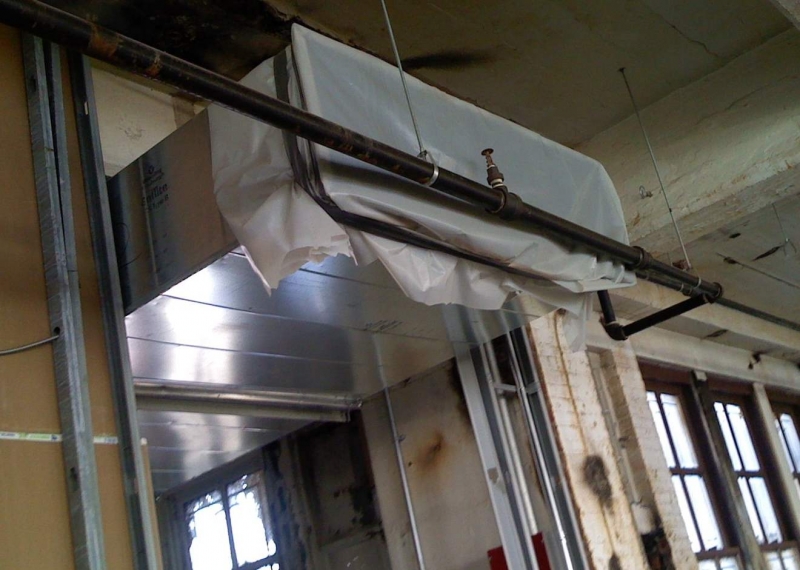
The contractor should create the IAQ management plan before construction even begins, and check on compliance at various times throughout the process—including collecting photos for credit documentation.
Know the standard
LEED requires you follow the SMACNA 2007 guidelines. (See Resources.) Chapter 3 of the guide describes Indoor Air Quality (IAQ) management.
The SMACNA document offers not a checklist but guidelines. The guide addresses several sources for construction indoor air pollution and offers best practices to address them. It’s a good idea to incorporate as many of the recommended guidelines as are applicable to your project.
The following are the major areas covered by SMACNA.
- HVAC Protection: Make sure that dust and construction debris do not accumulate in HVAC ducts. Strategies include wrapping HVAC ducts in plastic and storing ductwork in dust free areas before installing.
- Source Control: Address the sources of construction pollution and looking for ways to reduce them. Strategies include using low-VOC materials, paints, coatings, adhesives, sealants (as covered in IEQc4.1–4.4); exhausting gas-fueled construction equipment directly to the outside; and storing VOC-containing materials away from absorptive materials.
- Pathway Interruption: Use negative pressure and or temporary hanging plastic to contain areas that may generate construction dust, for example, wood-cutting and drywall-cutting areas.
- Housekeeping: Keep a clean work site by sweeping, wet mopping and using low-VOC cleaners.
- Scheduling: Coordinate the movement of occupants to minimize their exposure to construction debris; schedule installation of absorptive materials to limit the materials’ exposure to VOCs and moisture.
More than just SMACNA
In addition to the SMACNA requirements your project will be required to protect absorptive material from moisture. This includes any absorptive materials, like drywall, carpet, and ceiling tiles. Take pictures of this for documentation.
If HVAC equipment will be used during construction, you will need to install MERV 8 filters and replace them before the building is occupied.