
The 10% point threshold is easy to achieve for this credit, especially if your project has a lot of concrete or steel. There is also an increasing number of products on the market that have recycled content, making the 20% threshold achievable for some projects. Concentrate on buying “big ticket” items with high recycled content levels. Depending on the building construction, you will generally get more (due to a higher cost) out of tracking the recycled content of concrete and steel over lower cost items like tile.
Analyze your budget early in design to help inform which materials are more important to specify as having recycled content, this is dependent on your project construction type. Doing your homework early can prevent costly change orders during construction. Big-ticket products that often have recycled content include steel, drywall, insulation, ceiling tiles, concrete, VCT, commercial carpet, and composite substrates.
Learn the lingo
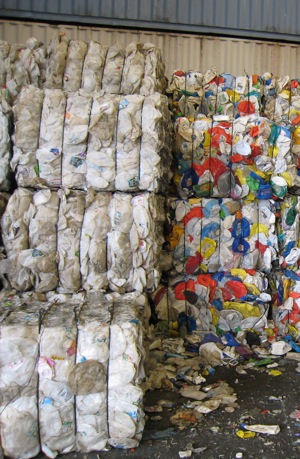
Recycled content can be pre-consumer (also known as post-industrial), or post-consumer. These are valued differently in LEED calculations. Pre-consumer content is worth 50% of its cost value, while post-consumer is worth 100%.
 Don’t assume that because an item has recycled content you can count the whole cost of that item towards the credit—the value contributing to the credit equals the percentage of recycled content times the value of the material. (See the Recycled Content Assembly Calculator in the Documentation Toolkit.)
People sometimes confuse recycled content material with material reuse and with construction waste management, but they are different:
Recycled Content material, covered in MRc4, has reused content as a result of the industrial process of making the product—for example, recycled-content carpet may be made of recycled plastic bottles.
Material Reuse, covered in MRc3, is the use or repurposing of material from a previous place or role—for example, buying antique wood doors salvaged from an old church.
 Construction Waste Management, covered in MRc2, is the act of diverting materials from the landfill during the construction process by sending to a place where the material can be repurposed, such as a salvage yard or recycling plant.