
This credit addresses two basic issues: density of the surrounding neighborhood and occupant access to everyday services. It encourages use of existing infrastructure and tries to reduce environmental impacts of transportation. It’s easier for projects located in a densely built area or with a host of community services nearby.
This credit, like SSc1: Site Selection, is intended to encourage commercial interiors projects to locate in more environmentally friendly buildings. Many projects have a location determined by other factors, so while it may not be a strong driver for that decision, it does reward you for locating in developed areas and for choosing infill instead of greenfield sites.
 In determining how easily your project can comply, site selection is one key factor, but so is the availability of property and building data for documentation purposes.
Two compliance options
There are two compliance options for this credit. Unless you are in a dense urban neighborhood where either option is possible, your choice will probably be determined by the specifics of your project.
- Option 1: Development Density requires the density of the community to be 60,000 square feet of floor area per acre or more. This is a typical density for a two-story downtown development.
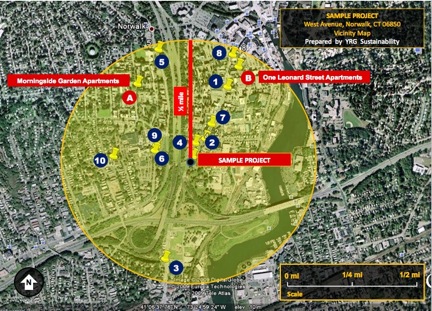
- Option 2: Community Connectivity requires connections to neighborhood services as well as to housing with at least 10 units per acre. This option could apply to a variety of settings, from urban areas to rural small towns with density of services.
Documentation is key
Project teams should assess early in the planning stage which path is most suitable based on project location and the availability of density data. The owner, architect or civil engineer (if your project team has one) often take on the role of documenting this credit—either researching community services in the project’s vicinity, or documenting the density of the project and surrounding area.
The size of the area that has to be included in the Option 1 calculation depends on the size of your project site.
Eight of the ten services for Option 2 have to be existing and in operation at the time of the project opening. Two services can be anticipated within a year of opening. One service can be within the project itself.