
This credit promotes efficient, high-performance lighting systems through increased controllability for building occupants. Allowing individuals control over the lighting levels in their workspaces can enhance their comfort, productivity, satisfaction, and overall wellbeing.
Better lighting controls can also increase the energy efficiency of a lighting system by encouraging occupants to use task lighting focused on their activities and work area rather than increasing the general ambient lighting level. Appropriate controls not only reduce the electricity use for lighting, but also reduce the cooling load by allowing occupants to turn off lights when leaving their space or when daylight is sufficient.
Straightforward requirements
The credit requires the design provides for individual lighting controls for a minimum of 90% of building occupants, and that all shared, multi-occupant spaces be equipped with lighting controls.
In most buildings, the majority of these requirements can be satisfied simply by providing an on-off switch for each multi-occupant space and task lighting in individual workspaces—but be aware that standard lighting system design may not allow for adjustments to lighting levels to meet specific, task-related needs.
Optimize your design
It’s strongly recommended that you optimize the lighting system design. This could mean a combination of dimmers, occupancy and daylight sensors for multi-occupant spaces, and adjustable task lighting for individually occupied spaces. Take note, however, that dimmers, occupancy sensors and daylight sensors alone do not meet the credit requirements unless they have an override switch.
Low-cost approaches vary by building type
This credit is fairly low-cost and is generally easy for any project type to earn. Different projects will need to use different strategies to earn the credit. For example, residential and hotel projects can earn the individual lighting controls portion of the credit simply by providing switches in each room.
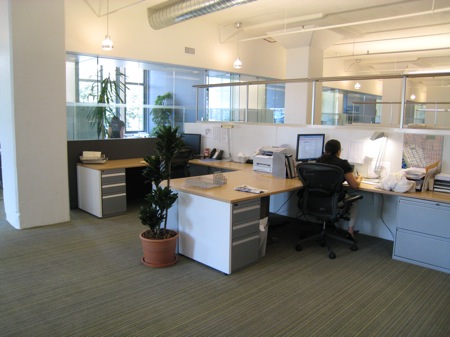 Most office projects can meet these requirements by providing either multi-circuit lighting or daylight harvesting with a manual override switch and some ability to control glare (like blinds or light shelves).
Other unique programming considerations
- For buildings with unique programming, like hospitals, make an extra effort to ensure that the appropriate number of controls is provided for each space type. In a hospital reception area, for example, this includes controls for the reception and waiting area and for each reception area workstation.
- Consider the applicability of providing lighting controls customized for the project's programming. For example, lighting controls for 90% of occupants in individual workspaces and all multi-use spaces might not be conducive in detention centers, museums, or other unique programming types. Consult with GBCI and refer to published exceptions and appropriate alternative compliance paths.
- Effective coordination of ambient lighting systems and individual lighting controls is critical to both good lighting system design and energy system performance.
- Consider the difference between providing lighting controls and lighting controllability. Lighting controls often operate occupancy and daylight sensors, which do not necessarily meet credit requirements (unless they are paired with override switch). Lighting controllability, however, provides occupants the ability to control their own lighting needs.
When in doubt about how to treat a specific space in your project relative to occupancy type, consult the IEQ Space Matrix, a guidance document from USGBC (see Resources). This spreadsheet lists dozens of specific building and space types, and how to treat them for individual credits.
How this credit is addressed in specific building types
Office – Provide a switch in each multi-occupant space and task lighting at each workstation. Meeting rooms and conference rooms are considered multi-occupant spaces, while private offices and cubicles are considered individual work spaces.
Multifamily – Provide a switch in each room or separate space. Bedrooms, kitchens, dining rooms, family rooms, dens, etc. all require individual controllability. Switches will also need to be provided in each multi-occupant space, such as laundry facility, shared kitchen, or lounge area.
Hotel - Provide a switch in each room or separate space, and task lighting at reception and other office workstations. Switches are also needed in each multi-occupant space, such as laundry facilities or lounge areas.
Warehouse – Warehouse space, loading areas, break and meeting rooms are all considered multi-occupant spaces and require appropriate controls. Workstations within a warehouse require individual lighting controls.
Hospital - Waiting and reception areas, cafeterias, and conference rooms are considered multi-occupant spaces and require appropriate controls, while private exam and recovery rooms are considered individual-use areas.
Manufacturing – Manufacturing and warehouse spaces, loading areas, break and meeting rooms are all multi-occupant spaces and require appropriate controls. Workstations within a manufacturing space likely require individual lighting controls.