
Through this credit, you incorporate the building’s sustainable design features directly into the school curriculum, enhancing students’ educational experiences, while getting more benefit from the school’s investment in sustainability.
The school itself acts as a living lab that informs students about energy and water efficiency, indoor air quality, connection to the outdoors, and can motivate students to get involved in activities that promote sustainability and environmental awareness. Hands-on learning can provide both a more exciting learning environment and a more effective educational experience.
The school’s “green team” is the key player
It’s critical to enlist a group of faculty—the “green team”—to initiate and follow through with implementing the curriculum. Your first step should be to open communication with teachers to gauge their level of interest in working with—and in creating—this type of curriculum.
Further down the road, the project design team should meet with the “green team” to brief them about the building’s sustainable and high-performance features.
Plenty of room for creativity
The curriculum can cover any aspect of the building’s green features and can be incorporated into any class. There’s an obvious link between green building and science or math, but there are ways to incorporate sustainability into art, health, shop, or almost any other class.
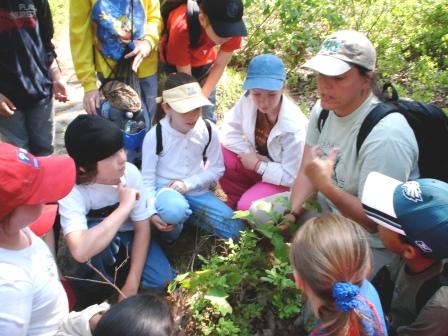 Think big! Some creative examples include cooking with vegetables from the school’s green roof, calculating the school’s Energy Star score, or learning about volatile organic compounds (VOCs) and how they affect human health.
Dovetail with the existing curriculum
The “school as teaching tool” curriculum does not need to stand alone; in fact, it’s much easier to incorporate this credit into existing curriculum planning. Teachers must simply overlay the existing curriculum with new information about the building and discuss how it demonstrates sustainability. This will be easiest in schools that already have an environmental component to their curriculum.
You may meet some resistance
Teachers can be averse to the attempting this credit—and their hesitation can be justified. Changing a curriculum can be a contentious and political process, and it can be difficult to incorporate ten hours of sustainability instruction per student per year (the credit requirement) into an existing curriculum when teachers already feel that they are short on time.
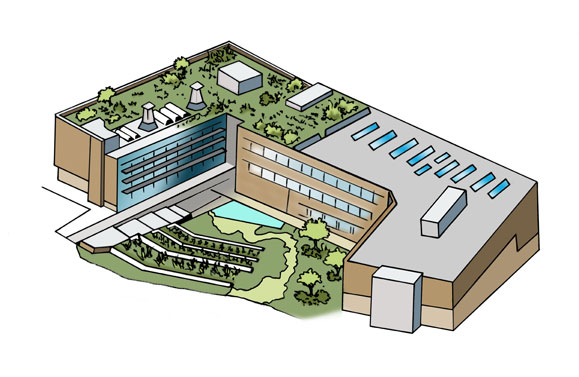 Elementary schools and schools that have many groups of students in a variety of curriculum tracks may also have difficulty. On the other hand, high schools, particularly those that focus on science and technology, may find this credit quite easy.
Consider these questions when approaching this credit
- Is there a teacher or group of teachers who want to head up this effort and be our “green champion” or “green team”?
- What type of input and participation from the design team would be most helpful to the teachers as they develop and implement the curriculum?
- How will our students benefit most? What classes are most appropriate for a sustainability curriculum? Are there existing curriculum areas that we can smoothly incorporate the building into?
- What does 10 hours per student actually look like?