
This credit is fairly straightforward and easy to achieve through prescriptive design measures such as using a light-colored roofing material or vegetation on a majority of the roof area.
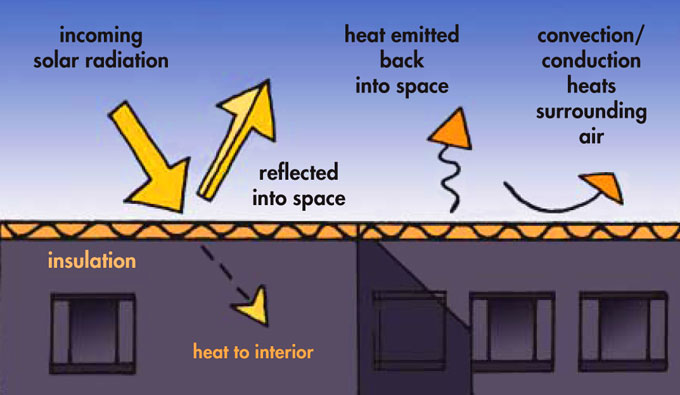
The heat island effect is more of a problem in urban environments with long stretches of hot weather. If your project is in such a location, this credit might be a higher priority from a comfort and energy perspective. Incorporating a reflective roof or green roof will help to reduce cooling loads, thereby lowing energy consumption and making for a more comfortable space.
What’s “SRI”?
“Solar reflectance index” or SRI is the measure of a surface’s ability to reflect solar heat. Higher reflectivity is desirable, because it helps combat the urban heat island effect. SRI can range from zero to over 100, with darker surfaces closer to zero and lighter surfaces approaching 100.
Go green?
Installing a vegetated, or “green” roof can be more expensive and complicated than installing conventional roofing. However, a green roof will be more effective in combating the urban heat island effect, can offer additional energy benefits to the building through insulation, and can offer stormwater and wildlife habitat benefits.
 Using a green roof to gain this credit helps contribute to many other LEED credits such as: