
This credit provides a variety of options for using your project’s roof to reduce your contribution to the urban heat island effect, while also potentially reducing your building’s cooling load.
- Option 1: A light-colored roof with a high solar reflectance index (SRI) on at least 75% of the roof area.
- Option 2: A green roof on at least 50% of the roof area.
- Option 3: A combination of Options 1 and 2.
Most projects will choose Option 1, since many buildings already have reflective roofs that comply with the high-SRI requirement. For these projects, this option is a no-cost way to achieve the credit, but teams should be aware that roofs will need to be cleaned and maintained on a biennial basis in order to preserve their reflective properties.
You might also pursue Option 1 if your roof is nearing the end of its life and you need to replace it. You can fairly easily find light-colored roofing materials that are cost-competitive with conventional materials.
If you have a newer roof that is not reflective, there are high-reflectance coatings on the market that can bring your roof up to the required SRI, but these can be expensive per square foot and are a less common strategy for achieving the credit.
What’s “SRI”?
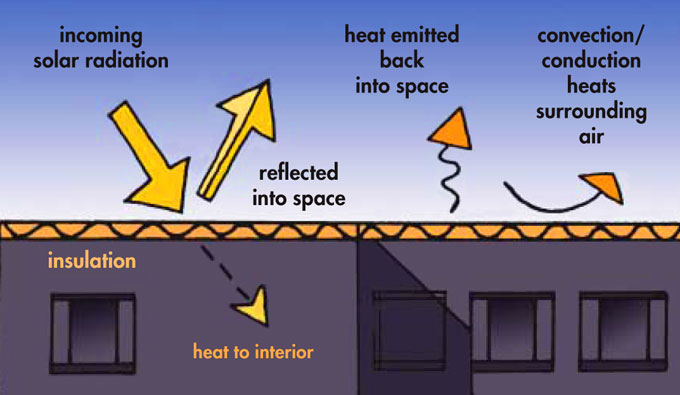
The “solar reflectance index” or SRI is the measure of a surface’s ability to reflect solar heat. Higher reflectivity is desirable, because it helps combat the urban heat island effect. SRI can range from zero to over 100, with darker surfaces closer to zero and lighter surfaces approaching 100.
Slope matters
When dealing with the high-SRI option for this credit, the SRI requirements vary according to the slope of the roof. A steep-sloped roof must have an SRI greater than 29 in order to be eligible for the credit, while a low-sloped roof must have an SRI greater than 78.
A little wiggle room
If your roofing material doesn’t quite have a high-enough SRI value but it covers more than the required 75% of the surface area, you can still comply with this credit through a calculation done automatically in the LEED Online credit form. For example, if a building has a flat, 10,000-square-foot roof, and 7,500 square feet has an SRI of 78, the project meets the minimum qualification for the credit. An otherwise identical building with a roof-SRI-value of 59 for the entire roof surface area would also meet the requirement.
Green roofs are somewhat less common
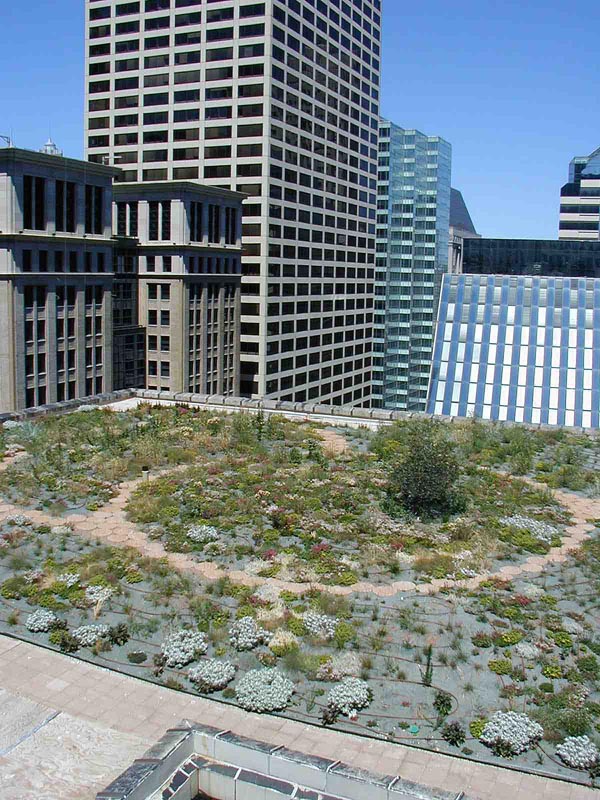
Vegetated or “green” roofs are a less common strategy for achieving this credit. The presence of a green roof will effectively contribute to increased energy savings, improved wildlife habitat, and better stormwater management (see LEEDuser’s green roofs strategy page); however, implementation may be limited by variations in roof structural capacity, local climate, and cost.
Vegetated roofs generally have higher first costs compared with more traditional roof systems, although they may have a more favorable life-cycle cost.
Consider these questions when approaching this credit
- Is the existing roofing membrane credit-compliant? Can you track down the SRI value from the manufacturer?
- Has regular cleaning (at least every two years) been conducted to maintain the SRI value? Can cleaning be arranged in the future?
- If the roof is not compliant, when is it due for replacement? Could the roof be replaced with credit-compliant roofing before or during the performance period?
- If the roof is not compliant, can a coating be applied to raise the SRI value to a compliant level?
- Is a vegetated roof a viable alternative? Can a green roof be supported structurally? Is the climate conducive to supporting native plant life without permanent irrigation? Have other buildings in this locale successfully used green roofs? Is a green roof cost effective over the long term?