
This credit encourages the use of building systems submetering to enhance the ability of operational staff to analyze specific energy loads and to pinpoint potential areas for improvement in system-level or equipment performance. This detailed analysis is not possible through data collected by regular utility meters.
Although submetering can often lead to energy use reductions, the credit does not require you to demonstrate them.
To submeter or not to submeter
Many teams choose not to pursue this credit due to the difficulties of integrating submeters in an existing system in order to isolate end-use energy consumption, and the cost of installing submetering equipment.
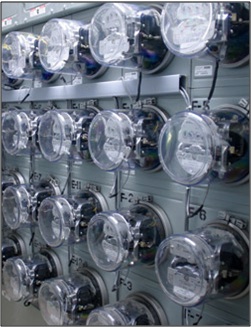 If a project building already has submeters in place, it is much more common to pursue the credit. In some situations teams expand the level of submetering as part of the LEED process.
Favorable scenarios for the credit include the existence of a building automation system that can be used to help track and monitor submetered data, or building systems where the majority of the building’s loads are generated by a few larger systems.
Focus on end uses
Submetering for EBOM focuses on end-uses such as space heating and cooling, area lighting, and ventilation fans, and on total system consumption, rather than on what types of energy are used. Therefore, earning this credit entails more than simply measuring a building’s natural gas use, for example—unless all the gas is used by one end-use system.