
This credit offers a variety of strategies for residential, non-residential and mixed use projects. These strategies help to reduce the number of cars on the road, cut down on the sprawl of parking facilities, and decrease the negative environmental impacts of parking infrastructure, including stormwater runoff and the urban heat island effect.
Getting mileage out of your efforts
Assess the location and context of your project to make sure that carpooling, public transportation (see SSc4.1), walking and bicycle commuting (see SSc4.2) are viable strategies for reducing single-occupancy vehicle use.
If all you do is limit parking capacity in an area where options other than driving aren’t viable, your efforts could prove frustrating to drivers rather than truly beneficial. You may also want to consider implementing a program to incentivize public transit and carpooling.
Consider no new parking
This credit is fairly straightforward for most projects. Projects that either have no parking or are not providing additional parking automatically qualify. To make this work from a practical perspective, it’s a good idea to locate in an area with good public transit, pedestrian, and bicycle access.
You can also provide parking, with some caveats
Non-residential projects that will be providing new parking will need to reduce parking capacity to not exceed minimum zoning requirements, and LEED-NC projects must also provide preferred parking for carpools (Option 1).
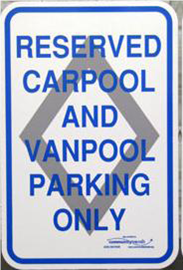 Residential projects that will be providing new parking will need to reduce parking capacity to not exceed minimum zoning requirements and facilitate programs to encourage carpooling among residents.
Mixed-use projects have to meet both requirements, on a proportional basis.
Follow these basic steps when approaching this credit
- Identify the appropriate strategy based on your project type and the context of the individual project. If providing no new parking, go ahead and document the credit. If providing parking, follow the remaining steps.
- Confirm the FTE for the project.
- Confirm local minimum zoning requirements for parking capacity.
- Determine the number of preferred parking spaces required or develop a ride-sharing program for your project.
- Include parking locations in the construction documents to ensure that signage and additional markings are included in the construction budget.
- Consider earning an exemplary performance point for a comprehensive transportation management plan.
- Document the credit and upload the documentation to LEED Online.