
All LEED projects already have to create a solid waste management policy for durable goods in order to meet the prerequisite MRp2. This credit deals with the implementation of that policy.
Durable goods include electronics, equipment, appliances, and furniture. Remember that you must classify durable goods consistently across all sustainable purchasing and solid waste management credits.
Diverting durable goods is already common practice
Usually easy to achieve, this credit requires that teams divert at least 75% of the durable goods waste stream from the landfill. Generally, durable goods are not sent to the landfill and can be easily collected on a quarterly or annual basis. It can get more difficult in multi-tenant buildings, where waste management is often not handled by a single management entity and more coordination with tenants becomes necessary.
In all buildings, this credit can only be earned if durable goods were diverted during the performance period, so if you don’t have any solid waste diversion activities scheduled during this time, plan to host at least one electronics waste collection event during the performance period.
“E-waste” is the primary target
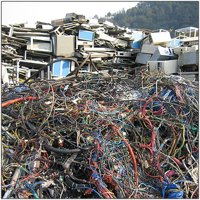
Electronics waste (e-waste) tends to make up a large portion of the durable goods waste stream—more so than furniture—and tends to be the primary driver of credit compliance. E-waste is a huge part of the waste stream, and it’s filled with heavy metals that are environmentally damaging to mine, and that pollute air and water when disposed of in incinerators or landfills.
Remember that furniture waste is also covered under this credit and must be accounted for—project teams often forget to include furniture as a durable good because it is not mentioned in the credit language.
Many buildings already do some management of e-waste, and can earn this point by formalizing and ramping up their programs. Furniture, appliance, and electric-powered equipment disposal must still be managed, but those tend to be disposed of less frequently and may require less management on an ongoing basis.
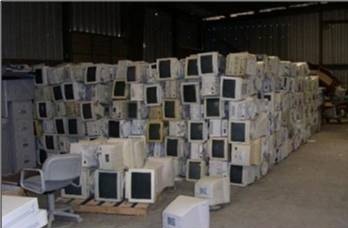 In larger buildings, consider collecting e-waste to be hauled away on a quarterly basis. Individual tenants will often collect and store electronics on their own to salvage components before disposing of them. In this case, management may not need to facilitate collection on a more regular basis.
In smaller buildings, consider dedicating a storage area for durable goods until enough is collected to warrant a hauler pick-up. In all cases, ongoing communication with tenants and occupants to encourage program participation is crucial.
You gotta keep ’em separated
It is important for project teams to find an effective mechanism to keep durable goods out of the ongoing consumables waste streams. Use dedicated storage space for durable goods and consider restricting access to dumpsters.
With effective separation and tracking, projects are often able to recycle 100% of durable goods. If they hit a 95% threshold, they can earn an Exemplary Performance point through IOc1.
Consider these questions when approaching this credit
- What durable goods are likely to be a part of the building’s waste stream?
- How are these materials currently handled from a waste management perspective? What individuals or departments are involved?