
The large and thriving market for reused furniture makes this credit an easy one to achieve—and you can often find items that are as good as new. It can be a bit more time-consuming to search for furnishings that are appropriate for your project, and to ensure that what you find is durable enough.
If your project involves moving existing tenants from one location to a new commercial interior fit out, the easiest way to obtain this credit is to reuse your existing furniture.
Reused vs. recycled
It’s common to have some confusion about the difference between “reused” and “recycled.” Often the terms are (incorrectly) used interchangeably—but there is a distinct difference, especially for the purposes of LEED.
Recycled refers to anything that contains recycled materials as a result of the manufacturing process—a chair that contains recycled material, for example, could be made from post-consumer recycled plastic bottles.
Reused material is something that has been reused or repurposed from another location or a different role—like pews saved from an old church and used as seating in a meeting room, or wood salvaged from deconstruction and used to make tables, or reusing furniture from an original office in a new fit out.
Pricing can be tricky
Your project needs to have 30% of the total furniture cost come from reused furniture to get the credit. When you’re trying to determine the cost value of reused, salvaged, or donated materials for documentation, you may run into some difficulties, especially in finding replacement costs for comparable new products. It’s helpful to work with a construction pricing expert or furniture representative who may already have cost estimates on hand.
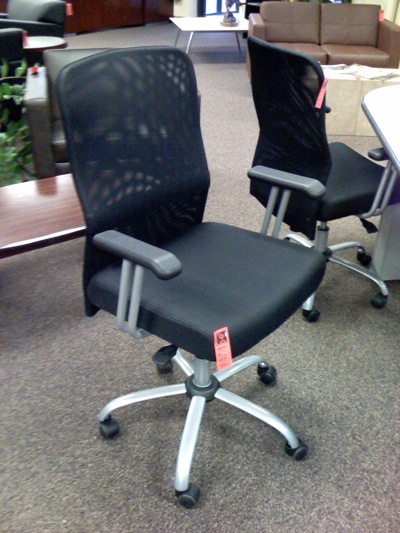 Another choice you will need to make is whether to value reused items at their actual cost or at the replacement cost. In some cases, it may not make much of a difference—the reused materials may be of similar value to the price of a comparable new item. But in other cases—for example, if you’ve purchased antique woodwork—the cost of the salvaged item may actually be significantly higher than the replacement cost of a comparable new item. A more common scenario is if the salvaged furniture was free because you are reusing existing furniture already in your possession, you need to price value it to something new that is comparable.
Piggyback credits, but follow the rules
In most cases, materials that have multiple environmental attributes can be applied to as many of the MR credits as they relate to. This credit put some tricky limitations on that practice, however.
For example, salvaged furniture may be found easily within 500 miles, meaning that it can contribute to both this credit and to MRc5: Regional Materials. But materials that apply to this credit cannot be applied toward:
- MRc1.2: Building Reuse—Maintain Interior Nonstructural Components,
- MRc2: Construction Waste Management (unless the materials have been salvaged onsite—see below),
- MRc4: Recycled Content,
- MRc6: Rapidly Renewable Materials,
- or MRc7: Certified Wood.
Construction waste management
MRc3.2 can involve furnishings that are salvaged onsite and used again onsite for another purpose or in another location, meaning that some materials can count toward this credit and toward MRc2: Construction Waste Management.
For example, if a project demolishes a building and saves all the wood doors, then turns the salvaged doors into tables for the new construction, the salvaged doors count both toward MRc3.2 and MRc2. That’s because the doors were reused as furniture and diverted from a landfill. (If they had just been reused as doors, they would count toward MRc1.2: Building Reuse—Maintain Interior Nonstructural Components.)