
This credit requires your project to demonstrate that at least 25% (by cost) of food and beverage purchases during the performance period meet any of the following standards and criteria:
- Harvested and produced within a 100-mile radius of the site
- USDA Certified Organic
- Food Alliance Certified
- Rainforest Alliance Certified
- Protected Harvest Certified
- Fair Trade
- Marine Stewardship Council’s Eco-Label
You can double the value of a purchase in your credit calculations if it meets one of the sustainability standards and is regionally harvested. Projects located in regions with significant agricultural activity may have an easier time meeting the credit requirements using the regional option.
…But they may be tough to swallow
This credit can be a difficult one for many projects, for a variety of reasons.
Many food-service providers are new to the idea of customers requesting local and sustainable options, and some may not be prepared or knowledgeable enough to work with your needs. In other situations, the service providers may be the ones deciding what products make their way into the project building, and they may be averse to the idea of purchasing new and potentially more expensive products, especially if they don’t share your interest in social and environmental values.
Documentation can also get complicated. Small buildings or those that serve very little food may have the easiest time simply because they have less to track. Multi-tenant buildings or buildings that are served by more than one vendor will likely have the most difficult time tracking sustainable food purchases.
Target higher-cost items
Foods and beverages that meet the credit criteria may often be more expensive than conventional options—but they also may have many human and environmental health benefits. Sustainable food can be more nutritious, preserve local ecology, reduce negative impacts from transportation, and support local producers.
Because this credit is cost-based, you might be able to get to 25% sustainable purchases simply by targeting a few higher-cost items.
Change with the seasons
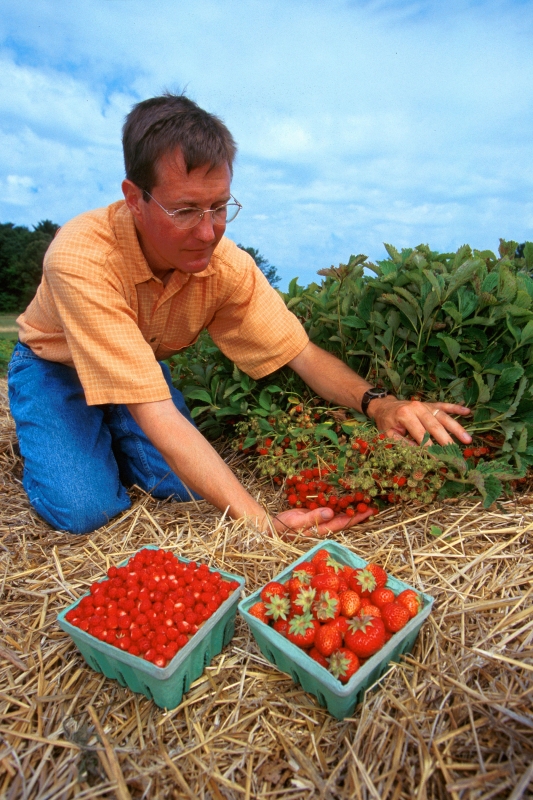
The way you choose to approach this credit may vary between the winter months and the summer months. You might consider “eating with the seasons”—some fruits, vegetables, or other foods may not be grown or available in your region at certain times of the year, so prioritize other foods that are more readily available in your region.
A good example is tomatoes—most regions of the U.S. do not produce tomatoes during the winter months. Purchasing tomatoes only when they are in season locally will cut down on the amount of food you are sourcing from distant places.
Don’t forget about catering
Most buildings employ a catering service at some point. For larger buildings and multi-tenant spaces, catering may represent such a small portion of total food purchases that it’s not worth tracking. But for smaller projects and single-occupant buildings that don’t offer regular food service, catering may present the only opportunity to get credit for sustainable food purchases. In these types of buildings, as long as 25% of the food and beverages served at catered events meet the sustainability criteria, you can earn the credit.
What does "produced" mean?
The MRc5 credit language refers to food that is "produced" within a 100-mile radius. This language has led to some confusion about whether food cooked or processed regionally, but with nonregional ingredients, can qualify. In fact, the food must be harvested regionally, and if the food is processed, the processing must also occur regionally. For example, in order for cheese to qualify, the dairy farm and processing plant must both be within 100 miles of the project site.
Consider these questions when approaching this credit:
- How is the project team currently sourcing foodstuffs?
- If the project team does not provide food services in-house on a daily basis, does the project building ever sponsor or host events at which food is provided? Either of these scenarios provides an opportunity to pursue this credit successfully. Buildings must host at least one event where food is served to earn this credit.
- If your team sources products through a vendor, does the vendor have access to credit-compliant products, and can they document that the products meet the criteria? (See examples identified in the Reference Guide and Documentation Toolkit)
- Is the project team willing to find a new vendor or take over food purchasing if the current vendor is not on board?
- Who assesses the products currently used and identifies sustainable alternatives?