
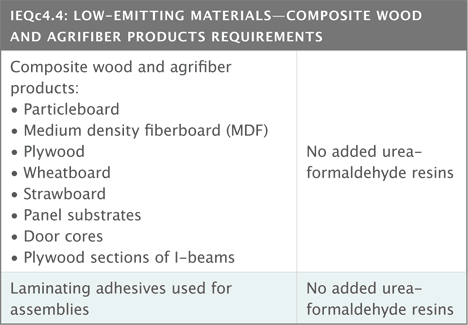
 Like most of the other low-emitting materials credits, this credit is all-or-nothing.
Composite products and laminating adhesives can have no added urea-formaldehyde (UF) resins. This credit applies to the manufacturing of all composite materials and laminating adhesives used on the project (and installed within the weather barrier), in contrast with IEQc4.1 and IEQc4.2 that only apply to site-applied products. For this credit, there is no “VOC budget” option as there is with IEQc4.1 and IEQc4.2.
UF is an inexpensive binder that is widely used in interior-grade particleboard, MDF, and plywood. If you are looking for products without UF, look for exterior-grade plywood (UF is not used there because it is not moisture-resistant), straw-based agrifiber panels (in which UF doesn't perform well as a binder), pMDI binders, or soy-based binders, all of which are commonly available.
Different kinds and sources of formaldehyde
Some woods have naturally occurring formaldehyde, so note that the credit does not address total UF content, but added UF. To be compliant, products simply need to have no added urea-formaldehyde binders and glues. Other types of formaldehyde binders—phenol and melamine—are allowed under this credit, as their formaldehyde content is more tightly bound.
Do your research
Research credit-compliant products, including plywood, MDF, door cores, laminate countertops, and other composite materials before construction begins helps to ensure that the right products are used. Early research helps avoid costly change orders and mistakes that would disqualify you from earning the credit.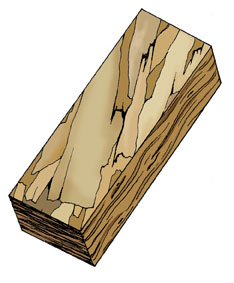
While most of the focus in this credit is on composite wood, make sure to check the laminate adhesives used by manufacturers in products such as countertops, doors, flooring and millwork that has adhered edging, laminates, and veneers. (The laminates themselves are not covered by the credit—just the adhesives.)
Don’t use or choose products that merely claim to be “low-emitting.” You have to find and submit documentation that proves the project met the specific credit requirements.
Only 20% of product cut sheets selected at random need to be uploaded to LEED Online to document this credit, although it is best to keep all product cut sheets on file in case the credit is audited.