
Addressing both interior and exterior lighting, this credit seeks to reduce light pollution that can block our view of the night sky and cause human health problems as well as ecological problems for many birds, insects, and other animals. Light pollution often represents nighttime lighting that isn’t needed and that may cause light trespass and contrast, reducing visibility.
More light can be less safe
Many people think that more lighting means better nighttime safety and security. However, too much exterior lighting can make outdoor and parking areas less safe by creating high contrast between lit and unlit spaces. Among other problems, when the human eye is flooded by bright light, it becomes harder to adjust to darker areas and shadows. Too much exterior lighting also means unnecessary energy consumption. Some objectives to keep in mind when striving for safe, efficient, and aesthetically pleasing lighting design are lighting uniformity, low contrast, no glare, and preventing light from spilling off the site. This can be achieved through judicious selection of fixtures with full cutoff that direct light toward the ground but prevent it from shining up into the night sky.
Easiest with a BAS—doable otherwise
Light pollution reduction is a simple credit to achieve if you use a building automation system (BAS) to control lighting. If not, compliance with the credit can be more complex, but not necessarily very expensive. If you don’t already have automated controls or occupancy sensors for interior lighting, or a design in which light fixtures aren’t directly visible from the exterior, the requirements for interior lighting can be fairly challenging to meet. However, only non-emergency lighting that has a direct line of sight to an opening in the building envelope needs to be automatically controlled.
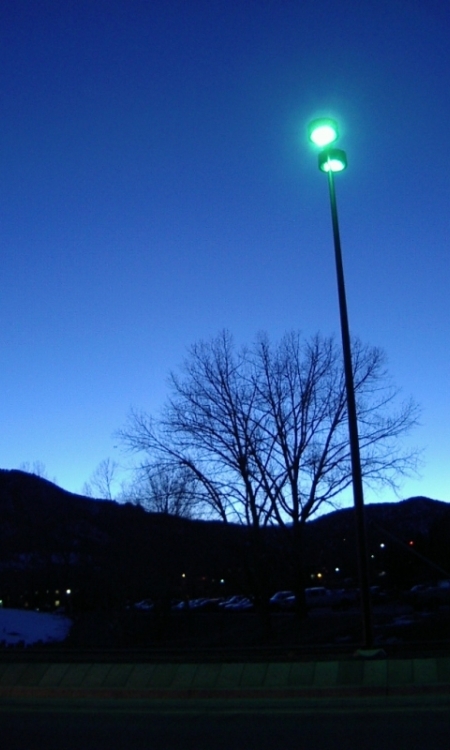
Several rules to follow
This credit offers three different rules for analyzing your existing interior lighting to figure out whether each fixture meets the direct-line-of-sight requirement. The rules can be confusing, however, and completing this analysis doesn’t necessarily guarantee that you’ll comply with the credit requirements. On the other hand, the requirements for exterior lighting requirements are comparatively straightforward and cost-neutral in most circumstances.
To achieve all aspects of this credit, carefully assess existing conditions and determine what, if any, alterations to the existing lighting fixtures and controls are necessary. Use of an existing building automation system that controls interior lighting will give you the best shot at this credit.
Use these questions to assess potential for compliance
- Does existing interior lighting include automatic controls for perimeter spaces? If not, can the project comply with the exemption rules?
- What is the cost and effort associated with adding controls, if necessary?
- Are there opportunities to reduce exterior lighting levels?
- Are any exterior lamps over 50 watts shielded?
- Is light trespass at the LEED boundary minimal, likely qualifying the project for Option 3?