
To meet this prerequisite, you will need to assess the efficiency of your basic indoor plumbing fixtures, such as faucets, water closets, urinals, and showerheads, and determine how much potable water is consumed relative to a LEED baseline case. If your current bathroom, kitchen and janitorial closet fixtures are already highly efficient, you will probably meet the prerequisite. If your installed fixtures are older and exceed the baseline, you’ll need to modify them.
Baseline depends on when fixtures were installed
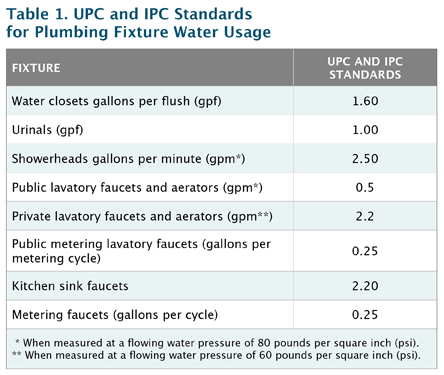
The baseline for the prerequisite is established by calculating how much water the project building fixtures would use, based on actual occupancy figures and usage patterns, if it were fully compliant with IPC/UPC 2006 plumbing codes displayed in Table 1. This baseline also takes into consideration the installation date of the relevant fixtures. For plumbing systems substantially completed before 1994, the baseline is set at 160% of the IPC/UPC-compliant figure; however, for systems substantially completed in 1994 or later, the baseline is set at 120% of the water usage with code-compliant fixtures. Buildings with a mixture of fixture installation dates will use a weighted average to determine the final baseline.
Inventory installed fixtures
To determine compliance, you will need to inventory all installed fixtures, and document their flow and flush rates and date of installation. It is very important to determine the correct baseline setting, so carefully consider whether you have completed any major renovations to your bathrooms and associated plumbing systems in 1994 or later. If you have a pre-1994 building and have simply replaced bathroom fixtures without performing a more complete renovation of the bathroom structure and plumbing system, you’re allowed to use the 160% baseline for all of your fixtures.
Installing flow or flush restrictors, such as faucet aerators or dual-flush flushometers, will carry relatively low costs. Expect significantly higher costs if you must replace the existing toilets to accommodate more efficient flushometers. Depending on water and sewer rates, plumbing retrofits like these can pay off relatively fast, however.
Pay careful attention to the credit form
The key to successful documentation of this credit is proper setup of your building fixture groups in the LEED Online credit form. This part of the form can be confusing and is often misinterpreted. Carefully review the instructions on creating these fixture groups and make sure that the credit form is displaying the correct values for occupancy and number of fixtures in your building when you are finished. USGBC has provided a guide that helps clarify many common issues—be sure to review this (see Resources).
If you have a pre-1994 building, and are planning on performing a major bathroom renovation as part of the overall LEED project, be sure to register the project through LEED Online before starting any retrofitting in order to claim the less stringent 160% baseline.
Gather this information
- How many different types of each fixture are installed in the building? Are fixture specs or product data sheets available for the installed fixtures?
- What is the date of substantial completion for plumbing? Was the project initially built before 1994? If so, have there been renovations since 1994 that affected plumbing fixtures?
- What opportunities exist for low-cost upgrades?
- What upgrades will have the greatest effect on reducing water consumption?
- Are there any high-intensity water uses, for example, a fitness center with showers?
- Are rebates or incentives available to offset upgrade costs?